
 En
En  English
 简体中文
简体中文
What Are Rubber Belts Used For? Automotive, Industrial & More Applications
You may not see them, but rubber belts are hard at work in your car, in the drill press at a workshop, in the packaging line at a food factory, and in the treadmill at the gym. They turn crankshafts, drive pumps, keep conveyor rollers moving, and coordinate robotic arms. Rubber belts are used for a simple reason: they are the most practical way to transfer power between rotating shafts when noise, vibration, maintenance cost, and installation space matter.
Quick answer: Rubber belts transmit rotational power, synchronize moving parts, and absorb vibration in automotive engines, industrial machinery, home appliances, and agricultural equipment.
Main Rubber Belt Types and How They Work
At a basic level, a rubber drive belt is a flexible composite of rubber, reinforcing cords, and sometimes a protective fabric cover. The cross-section and tooth shape decide which jobs it can handle. Choosing between them is the first step toward a reliable drive.
V-Belts
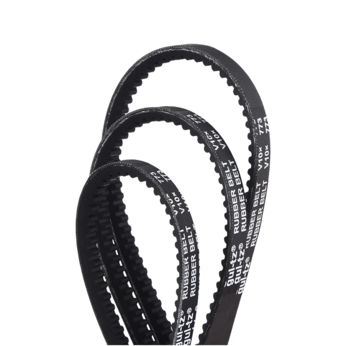
V-belts have a trapezoidal cross-section that wedges into a V-shaped pulley groove. This wedge action creates high friction without excessive tension. They are common in air compressors, pumps, fans, blowers, and other constant-speed industrial drives where shock load may occur.
V-Ribbed Belts
V-ribbed belts, also called poly-V or serpentine belts, combine several small V-ribs on a single flat underside. The thin ribs allow the belt to bend over small pulleys quietly, while the broad contact surface distributes load evenly. This makes them the standard choice for compact high-speed drives in modern cars and household appliances.
Synchronous Belts
Synchronous timing belts use molded teeth that mesh with grooves on the pulley. Because the engagement is positive, there is no slip. This keeps driven shafts exactly in step with the driver, which is essential for engine valve timing, robotic axes, print registers, textile machines, and any automation where position error would create scrap or misalignment.
Flat Belts
Flat belts have a simple rectangular cross-section and run on cylindrical or crowned pulleys. They are lightweight and quiet, and they work well in low-tension, high-speed applications such as spindle drives and light conveyors.
| Belt type | Construction | Typical uses | Main benefit |
|---|---|---|---|
| V-belt | Trapezoidal cross-section, wrapped or raw edge | Compressors, pumps, fans, agricultural machines | High friction grip and shock absorption |
| V-ribbed belt | Multiple longitudinal ribs on one backing | Alternators, air-conditioning, power steering, appliances | Compact, flexible, stable at high speed |
| Synchronous belt | Toothed inner surface with a molded tooth profile | Engine timing, packaging machines, robotic axes | Zero slip, exact synchronization |
| Flat belt | Smooth rectangular surface | High-speed machinery, spindle drives, light conveyors | Quiet, thin, simple |
Automotive Rubber Belt Applications
Automotive engineers choose belts over chains and gear sets for three reasons: quiet operation, compact packaging, and lower installed cost. Two families of rubber belts do most of the work under the hood.
Timing Belts
A timing belt connects the crankshaft to the camshaft so that intake and exhaust valves open at the correct moment relative to piston movement. It is constructed with toothed rubber and low-stretch fiberglass or aramid cords. Most carmakers recommend replacement at intervals from about 60,000 to 100,000 miles. If the belt skips a tooth, the engine can run roughly; if it breaks on an interference engine, pistons can strike valves and cause serious mechanical damage.
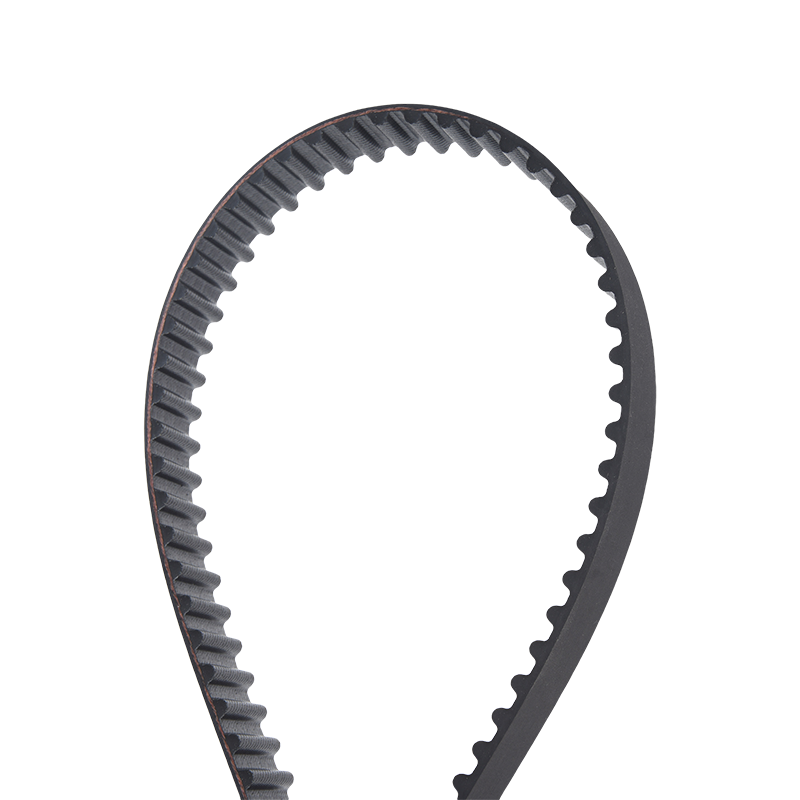 Automotive Timing Belt for Engine Camshaft DrivesThis toothed rubber belt keeps crankshaft and camshaft synchronized in engine valve timing, offering quiet operation and durability in high engine temperatures. Worth checking for replacement intervals starting at 60,000 miles.View Product →
Accessory Drive Belts
On the front of the engine, accessory drive belts turn the alternator, water pump, power-steering pump, air-conditioning compressor, and sometimes the supercharger. Modern engines often route one V-ribbed serpentine belt around all these pulleys. This reduces weight, noise, and maintenance compared with several separate V-belts. The flexible ribbed construction lets a single belt wrap pulleys of different diameters while still tracking straight.
Industrial Drive and Automation Uses
In a factory, a rubber belt is often the most economical way to transmit motor power over a short distance. The right choice depends on whether the goal is simple torque transmission or exact synchronization.
Exact Positioning with Synchronous Belts
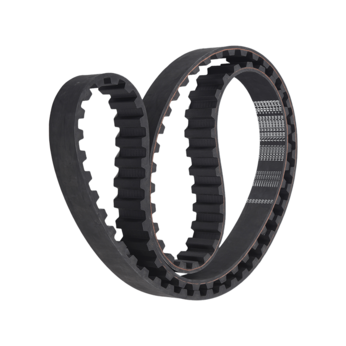
Synchronous belts appear inside packaging machines, labeling equipment, robotic gantries, and machine tools. Because the belt teeth lock into pulley grooves, there is no accumulated slip. A stepper or servo motor can index a table to a fraction of a millimeter cycle after cycle. Open-ended synchronous belts are useful for linear actuators, while double-sided belts can drive two lines of motion from one belt.
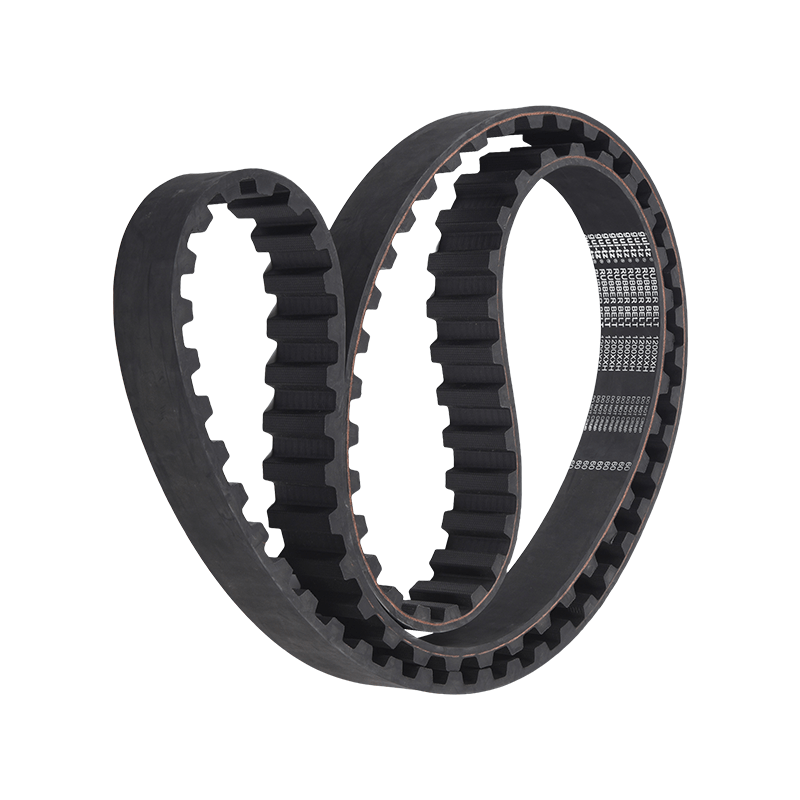 T-Type Synchronous Rubber Belt for Precision MotionA versatile chloroprene rubber timing belt with fiberglass cords and nylon facing, designed for slip-free indexing in packaging and robotic applications. Its open-ended and double-sided variants suit linear and dual-axis drives.View Product →
Shock Loads and V-Belt Drives
Where load peaks are frequent, a wedge-shaped V-belt has a natural advantage. The belt slips slightly under a sudden surge, absorbing energy and protecting the motor or gearbox. Raw-edge and cut-edge V-belts are popular in mixers, crushers, grinders, and fans because they dissipate heat better than wrapped V-belts and run with higher efficiency.
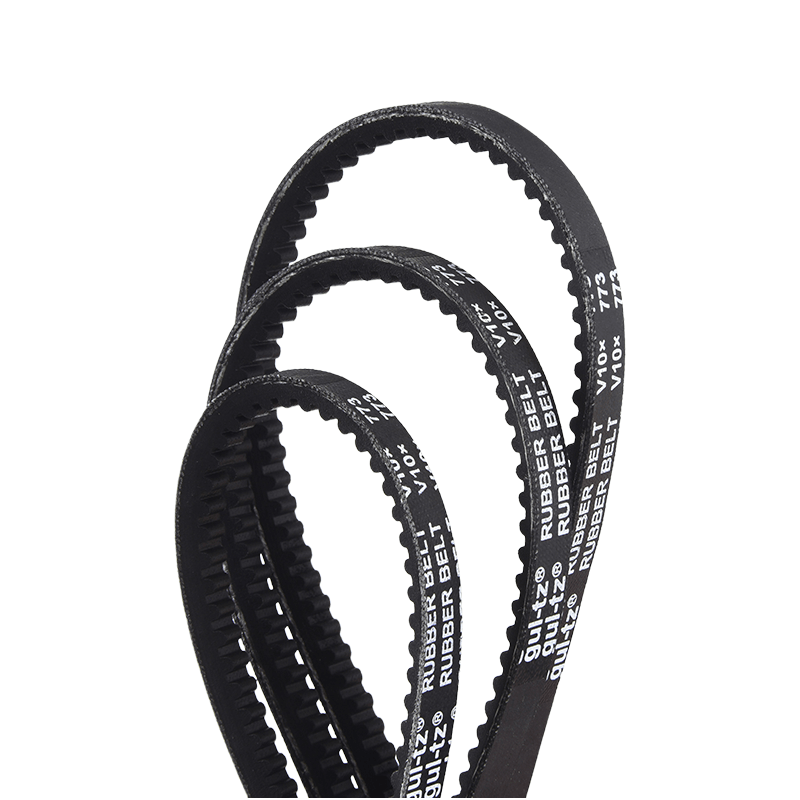 Industrial V-Belt for Heavy-Duty Power TransmissionA wedge-shaped V-belt that absorbs sudden load surges while protecting motors and gearboxes. Its raw-edge construction improves heat dissipation and efficiency, making it suitable for mixers, crushers, and agricultural machinery.View Product →
Agricultural, Household, and Other Equipment
Agricultural machines operate outdoors, so their belts must handle dust, mud, moisture, and rapid temperature changes. V-belts and variable-speed V-belts drive the threshing drum, chopper, fan, and cleaning systems of harvesters. On a baler, a V-belt controls the pickup and auger speed without adding complex gearing.
In the home, rubber belts turn the drum of a washing machine, drive the brush in a vacuum cleaner, operate a garage-door opener, and accelerate the deck of a treadmill. The requirements are similar: low noise, stable friction, and predictable service life. Rubber belts also appear in power tools, lawnmowers, generators, and small pumps, where they replace chains when corrosion, lubrication, or noise would be a problem.
How to Choose the Right Rubber Belt
Start with function, not price. Ask whether slip can be tolerated, how much load variation exists, and what the operating environment will be. Oil can soften natural rubber; ozone and strong sunlight can crack some compounds; heat can break the bond between cords and the rubber matrix. A belt that is too wide wastes energy, while a belt that is too narrow will overheat and slip.
- If exact shaft phase and speed are required, choose a synchronous belt with the tooth pitch matched to the pulley.
- If the drive speed is above 15 m/s, prefer a V-ribbed or synchronous belt.
- If the system receives frequent shock loads, use a V-belt with a suitable cross-section.
- If the center distance is long, consider a flat belt or an open-ended synchronous belt.
- If oil is present, select an NBR or chloroprene compound.
- If the belt is exposed outdoors, choose an EPDM or ozone-resistant cover.
| Requirement | Recommended belt |
|---|---|
| Exact shaft phase and speed | Synchronous or timing belt |
| High torque with shock loads | V-belt |
| Compact serpentine accessory drive | V-ribbed or serpentine belt |
| High-speed, low-noise drive | Flat belt or synchronous belt |
| Wet or oily operating environment | NBR or chloroprene rubber belt with suitable cover |
For a step-by-step decision procedure, refer to our guide on how to choose the right drive belt.
Rubber Compounds and Belt Construction
Many end users forget that the “rubber” part of a belt is not uniform. A belt is built with reinforcing cords, a rubber matrix, and an outer friction cover. Fiberglass cords have low stretch and are standard for timing belts. Aramid cords offer higher strength and a higher service factor. Polyester cords suit lower-cost V-belts.
The rubber compound sets the temperature and chemical limits. Chloroprene rubber gives a balanced blend of heat, oil, and tear resistance. EPDM is excellent in heat, ozone, and water, but it has lower oil resistance. Nitrile rubber is chosen when petroleum products are present. Natural rubber contributes flexibility and abrasion resistance in clean, dry applications.
Rubber compound performance comparison (1 to 5 rating, higher is better)
Oil resistance
NBR 5
Heat resistance
EPDM 5
Ozone resistance
EPDM 5
Abrasion resistance
NR 4
Vulcanization bonds all these layers into one stable part. A belt produced on well-maintained equipment will run quieter and last longer than one made with poorly controlled molding and curing processes. Our manufacturing background covers more than three decades of synchronous belt and V-belt production, and that practical experience shows up in dimensional stability and service life.
If you are unsure about which belt construction your machine needs, you can review our company background to understand how we approach material selection and quality control.
Maintenance and Common Failure Modes
Rubber belts usually wear out before the machine does when the drive is not set up correctly. The following problems are common in both automotive and industrial drives.
- Misalignment: Check sheave alignment with a straightedge. Even a small angular offset causes accelerated rib wear, noise, and heat.
- Incorrect tension: A loose belt slips and glazes the friction surface. An over-tight belt overloads bearings and can shear the teeth of a synchronous belt.
- Contamination: Oil, grease, coolant, and dust break down the rubber and reduce friction. Keep the belt cover clean and inspect for fluid leaks.
- Heat aging: Excessive heat causes the rubber to become hard and crack. Look for small surface cracks and a shiny glazed face.
- Missing or cracked teeth: On synchronous belts, missing teeth usually indicate a tension or alignment problem. Replace the belt before the drive loses synchronization.
Store spare belts flat, away from direct sunlight, ozone sources, oil, and high temperature. A clean, dry storage area extends shelf life and prevents premature cracking.
Frequently Asked Questions
How long do rubber belts last?
Service life depends on type, load, speed, and environment. Automotive timing belts often have recommended intervals from 60,000 to 100,000 miles. Industrial V-belts under moderate loads commonly last three to five years with proper alignment and tension. The best practice is to follow the equipment manufacturer’s maintenance schedule and inspect visible surfaces for cracks, fraying, or glazing.
Can a rubber belt replace a chain?
In many drives, a synchronous rubber belt can replace a chain because it is quieter, requires no lubrication, and does not stretch as much as an old roller chain. Chains still make sense when the drive is extremely hot, heavily contaminated, or subject to continuous high shock load. A belt drive is usually lighter and less expensive to package.
What happens when a rubber belt fails?
The driven equipment loses power instantly. In an engine, a broken timing belt can allow pistons to hit valves and cause severe engine damage. In an industrial machine, a snapped belt can jam the pulleys and stop the production line. Regular inspection reduces the risk of unexpected failure.
Are rubber belts safe in wet or oily places?
It depends on the rubber compound. Nitrile rubber resists oil and grease well. EPDM resists water, heat, and ozone. Natural rubber is best for clean, dry, abrasive conditions. The belt cover should be selected to match the actual exposure, not just the belt shape.
How do I measure a belt for replacement?
Measure the belt type, top width or tooth pitch, and length. For a V-belt, check the cross-section and angle. For a synchronous belt, check the tooth profile and pitch. For a V-ribbed belt, count the number of ribs and measure the length. When in doubt, use the part number printed on the belt and verify dimensions against the pulley grooves.
Hot Products
-
 View More
-
 View More
V-belt For Industry
-
 View More
T Type Industry Rubber Synchronous Belt
-
 View More
Toothed wedge belt
-
 View More
Thickened timing belt
-
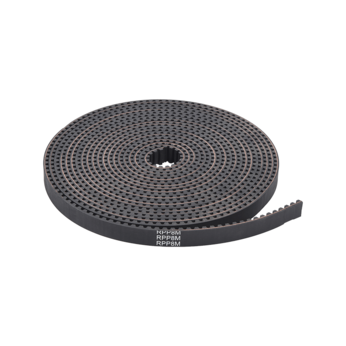 View More
Open Timing Belt
-
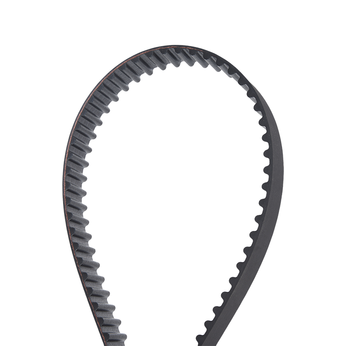 View More
Automotive V-belt
-
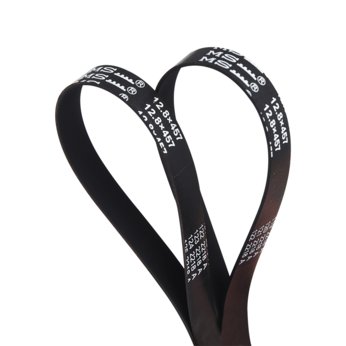 View More
Rubber Flat Belt
-
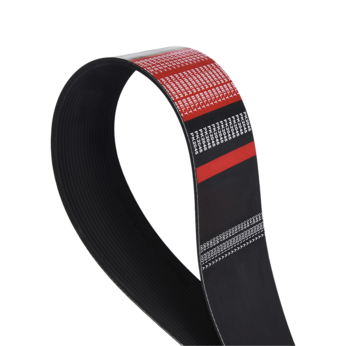 View More
Ribbed Belt
-
 View More
Synchronous Pulley
-
 View More
Arc tooth industrial rubber synchronous belt
-
View More
Automotive timing belt

Do you have a question? Feel free to contact!
 Tel: +86-0574-62498188 62497298
 Fax: +86-0574-62497297
 E-mail:
  Add: No. 65, Middle Jinniu Road, Moushan Town, Yuyao City, Zhejiang Province, China
Copyright © Ningbo GUL TZ Rubber Belt Co., Ltd. All rights reserved.

OEM Rubber Driving belts Manufacturers
