
 En
En  English
 简体中文
简体中文
RPP vs STD vs HTD: Which Tooth Profile Performs Better in High Torque Double-sided Timing Belt Applications
In the field of industrial power transmission, Double-sided Timing Belt systems are essential for driving multiple shafts in counter-rotating directions. These belts are widely utilized in printing, textile, and automated packaging machinery. However, when operating under High Torque conditions, the geometric design of the tooth profile determines the transmission stability, shear stress distribution, and overall service life.
The three most prominent curvilinear profiles in the market today are HTD, STD, and RPP. Understanding how each interacts with a Double-sided Timing Belt architecture is critical for engineering success in heavy-duty environments.
HTD Profile: The Foundation of High Torque Drive
The HTD (High Torque Drive) profile was one of the first curvilinear designs introduced to overcome the limitations of traditional trapezoidal teeth. Its deep-tooth construction allows for a larger contact area, which significantly reduces the risk of "tooth jumping" during high-speed operations.
In a Double-sided Timing Belt configuration, the HTD geometry excels at transferring circular force from the belt teeth to the internal tensile cords. However, its primary weakness in High Torque scenarios is the concentration of stress at the tooth root. While capable of handling significant loads, frequent start-stop cycles or shock loads can lead to micro-cracking at the base of the tooth. Consequently, HTD is best suited for applications with constant speeds and steady torque requirements.
STD Profile: Precision and Smoothness in Double-sided Designs
The STD (Super Torque Drive) profile, often characterized by its "Gothic Arch" shape, was designed to bridge the gap between precision and power. Unlike the circular arc of the HTD, the STD profile features a flatter top and a specific transition curve.
For a Double-sided Timing Belt, the STD profile offers superior engagement with the pulley grooves, minimizing lateral sliding. This precise fit results in lower noise levels and reduced Backlash, which is vital for high-precision positioning tasks. While highly stable, the relatively shorter tooth height of the STD means its ultimate resistance to tooth shear is slightly lower than that of the RPP when facing extreme instantaneous peak torques. It remains the preferred choice for high-speed, high-precision automated equipment.
RPP Profile: Evolutionary Strength for Extreme Loads
The RPP (Reinforced Parabolic Profile) is widely regarded as the most robust choice for High Torque Double-sided Timing Belt applications. It represents an evolutionary step beyond the HTD design, specifically engineered to handle increased stress.
The RPP profile features a parabolic curve on the tooth top, often including a small indentation or "dimple" at the apex. This unique geometry serves several functions: it allows for local deformation during pulley engagement, which reduces air entrapment and noise, and it significantly flattens the stress distribution curve across the tooth root. In a Double-sided Timing Belt, where internal shear forces are complex due to simultaneous loading on both sides, the reinforced base of the RPP tooth provides maximum resistance against "tooth shear" failures.
Furthermore, RPP belts are typically manufactured with advanced rubber compounds or Polyurethane reinforced with high-modulus glass fiber or steel cords. This combination allows the RPP profile to deliver a power rating that is often 10% to 20% higher than a standard HTD belt of the same width and pitch.
Technical Comparison for High Torque Stability
When evaluating these profiles for a Double-sided Timing Belt system, the following factors are decisive:
- Shear Resistance: RPP leads the category due to its parabolic stress distribution, followed by HTD.
- Positioning Accuracy: STD provides the most stable engagement with minimal backlash.
- Noise Reduction: The RPP and STD profiles are significantly quieter than HTD at high RPMs.
- Shock Load Absorption: The flexible parabolic design of RPP manages sudden torque spikes with the least amount of structural fatigue.
Hot Products
-
 View More
-
 View More
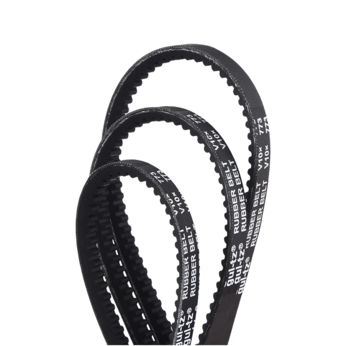
V-belt For Industry
-
 View More
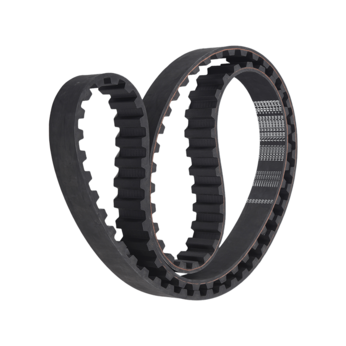
T Type Industry Rubber Synchronous Belt
-
 View More
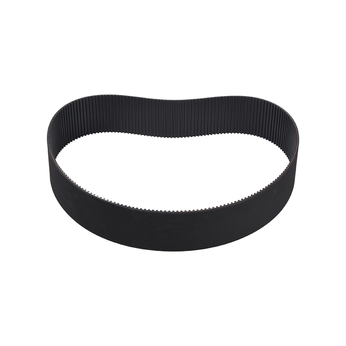
Toothed wedge belt
-
 View More
Thickened timing belt
-
 View More
Open Timing Belt
-
 View More
Automotive V-belt
-
 View More
Rubber Flat Belt
-
 View More
Ribbed Belt
-
 View More
Synchronous Pulley
-
 View More
Arc tooth industrial rubber synchronous belt
-
View More
Automotive timing belt

Do you have a question? Feel free to contact!
 Tel: +86-0574-62498188 62497298
 Fax: +86-0574-62497297
 E-mail:
  Add: No. 65, Middle Jinniu Road, Moushan Town, Yuyao City, Zhejiang Province, China
Copyright © Ningbo GUL TZ Rubber Belt Co., Ltd. All rights reserved.

OEM Rubber Driving belts Manufacturers
