
 En
En  English
 简体中文
简体中文
How Do You Know When Your Serpentine Belt Needs to Be Replaced
Engineering Behind Every auto serpentine belt We Produce
A serpentine belt looks simple from the outside, yet the compound recipe, the reinforcement cord, and the rib geometry are the result of years of tuning on the production floor. Every auto parts serpentine belt that leaves our facility is built to hold its rated tension across thousands of temperature cycles, resist glazing from oil mist, and keep noise levels low even after long service intervals. This section walks through the material choices, the production stages, the testing protocols, and the selection logic that separates a belt built to last from a belt built to a price point.
±0.3mm rib pitch tolerance
150°C peak thermal rating
120,000 flex cycles in fatigue testing
6 inspection checkpoints per batch
Material Science and Compound Selection
The backbone of any auto serpentine belt is the elastomer compound. Two compounds dominate current production: EPDM (ethylene propylene diene monomer) and CR (chloroprene, sometimes labeled neoprene). Each behaves differently under heat, ozone exposure, and oil contact, and the choice affects both service life and price positioning. We formulate both compounds in-house and adjust the sulfur cure system, carbon black loading, and plasticizer ratio depending on the target engine bay temperature profile.
| Property | EPDM Compound | CR / Neoprene Compound |
|---|---|---|
| Continuous heat resistance | up to 150°C | up to 110°C |
| Ozone and UV resistance | Excellent | Moderate, requires antiozonant additives |
| Oil and coolant contact resistance | Good | Very good |
| Typical elongation at break | 250% - 300% | 300% - 400% |
| Expected service interval | 90,000 - 100,000 miles | 60,000 - 75,000 miles |
| Cold flexibility (down to) | -40°C | -30°C |
Reinforcement cord runs through the compound in continuous strands, usually polyester or aramid fiber twisted into a low-stretch cable. This cord carries the actual load transmitted between the crankshaft pulley and the accessory pulleys, while the rubber compound provides grip through friction on the ribbed pulleys. A belt with worn or under-specified cord will stretch under load long before the surface rubber shows visible cracking, which is why cord quality matters as much as compound chemistry when a customer asks about a bad serpentine belt symptoms complaint that started with no visible surface damage.
Production Stages on the Factory Floor
Stage 1
Compound Mixing
Raw elastomer, carbon black, curing agents, and reinforcing fillers are banked and mixed in an internal mixer under controlled temperature to prevent premature scorching of the rubber.
Stage 2
Cord Treatment and Winding
Polyester or aramid cord is treated with an adhesive dip so it bonds chemically to the rubber layer, then wound onto a cylindrical mold at a fixed pitch to control stretch behavior.
Stage 3
Lamination and Molding
Compound sheets are laminated over the cord layer, and the sleeve is placed into a ribbed mold that presses the surface pattern that will later grip the pulleys.
Stage 4
Vulcanization
The mold is cured under heat and pressure so the sulfur cross-links form, converting the soft compound into a durable elastic sleeve with the rib profile locked in place.
Stage 5
Precision Cutting
The vulcanized sleeve is sliced into individual belts on a rotary cutter calibrated to hold rib count and width within tight tolerance across the full batch.
Stage 6
Inspection and Packaging
Each belt is measured, weighed, and visually inspected before it is coiled, labeled, and sealed to protect it from ozone exposure and moisture during storage.
Matching a Belt to the Application
Not every engine bay places the same demand on the belt. Rib count, belt length, and compound stiffness all change depending on how many accessories the belt drives and how tight the routing path is. Below is how we group applications when selecting the right profile for a production run.
Passenger Vehicles
Typically 6-rib (6PK) profile driving the alternator, power steering pump, and air conditioning compressor. Belt length usually falls between 850mm and 2200mm depending on engine layout.
Light Commercial Vehicles
Often 7-rib (7PK) profile to handle the added load of larger alternators and power steering pumps under higher duty cycles, paired with a heavier duty automatic tensioner.
Agricultural and Off-Road Equipment
Wider rib counts and thicker cross-sections to withstand dust ingress, vibration, and extended idle-heat exposure common in field machinery.
Marine and Industrial Engines
Belts formulated with additional salt-fog and moisture resistance, since these units run in humid or coastal environments for extended unattended periods.
Technical Specification Reference
| Profile | Rib Count | Overall Width | Typical Application |
|---|---|---|---|
| 4PK | 4 ribs | 12.0mm | Compact engines, limited accessory load |
| 5PK | 5 ribs | 15.0mm | Mid-size passenger engines |
| 6PK | 6 ribs | 18.0mm | Standard passenger vehicles with air conditioning |
| 7PK | 7 ribs | 21.0mm | Light trucks, higher accessory load |
| 8PK | 8 ribs | 24.0mm | Heavy duty and industrial engines |
Quality Testing Before a Belt Ever Leaves the Line
Reliability data does not come from a single spec sheet number. It comes from repeated destructive and non-destructive testing across sample batches. Our quality lab runs the following checks on every production run before belts are cleared for shipment.
Tensile Strength Test
Sample sections are pulled to failure to confirm the cord and rubber bond holds above the rated load with a documented safety margin.
Dynamic Flex Fatigue Test
A belt is run continuously on a test rig around small-diameter pulleys to simulate years of flexing, tracking crack onset over more than 100,000 cycles.
Thermal Aging Test
Samples are baked at elevated temperature for extended periods, then re-tested for elongation and hardness change to predict long-term heat exposure behavior.
Oil and Ozone Resistance Test
Belts are exposed to engine oil and ozone-rich chambers to confirm the compound resists swelling, cracking, and surface glazing over time.
Noise and Vibration Test
Belts are run on a multi-pulley rig that mimics accessory misalignment tolerances to check for chirp or squeal under realistic operating conditions.
Dimensional Inspection
Length, width, rib pitch, and rib depth are measured on a laser scanner against the master drawing before the batch is approved for release.
Reading the Warning Signs Correctly
Diagnosing a bad serpentine belt symptoms case correctly saves a technician from replacing the wrong part. A chirp at cold start that disappears after a minute usually points to a tensioner or idler bearing rather than the belt itself. A constant squeal under load, especially when the air conditioning compressor engages, more often points to glazing on the belt surface or a misaligned pulley. Cross-checking the symptom against the actual wear pattern on the belt ribs, rather than replacing on sound alone, prevents unnecessary comebacks.
Visual Wear Reference Points
| Observation | Likely Cause |
|---|---|
| Fine transverse cracks across ribs | Normal thermal aging, monitor and plan replacement |
| Chunks missing from rib tips | Pulley misalignment or foreign debris contact |
| Glossy, hardened surface | Oil contamination or excessive heat exposure |
| Frayed edge with visible cord | Belt tracking off the pulley face, check tensioner arm |
| Uneven wear on one side only | Pulley bracket bent or accessory mounting loose |
Cost Factors Behind a Replacement Job
The cost to replace a serpentine belt is rarely just the price of the belt. Labor time depends heavily on accessibility, since some transverse engine layouts require removing a splash shield or even an engine mount bracket to reach the belt path. Shops typically bundle a tensioner and idler pulley inspection into the same job because these parts share the same wear cycle as the belt and a second labor charge later is more expensive than replacing both at once.
Belt Only
Lowest cost option, appropriate when tensioner and idlers were replaced recently and show no play or noise.
Belt + Tensioner
Recommended when the tensioner has logged similar mileage to the belt, since a weak spring reduces belt grip and accelerates rib wear.
Full Accessory Drive Kit
Belt, tensioner, and all idler pulleys replaced together, the most labor-efficient approach for engines where the drive components are difficult to access individually.
Can I Drive My Car With a Worn Serpentine Belt
Whether it is safe to keep driving on a worn belt depends on which stage of wear it is in. A belt with light surface cracking that has not lost rib depth can typically finish a commute safely, but a belt that is already shedding rubber chunks or showing a frayed edge can fail with very little warning. Because a single belt on most modern engines drives the alternator, power steering pump, and water pump together, a sudden failure removes charging, steering assist, and coolant circulation at the same time, which is a very different situation from a single accessory going out on its own.
For long-distance travel or commercial routes, carrying a spare auto parts serpentine belt matched to the exact profile and length of the vehicle is a low-cost way to avoid being stranded, since roadside compatible sizes are not always available outside major service areas.
Choosing Between Aftermarket Options
When two belts share the same rib count and length on paper, the compound formulation and cord tension still create meaningful differences in how long the belt actually lasts on the vehicle. A lower-cost compound with less carbon black reinforcement may match dimensions exactly but glaze and harden years sooner than a belt built with a heat-stabilized formulation. Reviewing the compound type, not just the part number, is the more reliable way to compare two belts that appear identical in a listing.
What a Well-Built Belt Should Deliver
Consistent rib depth across the full length, a cord layer that resists stretch under peak accessory load, a compound rated for the actual under-hood temperature the vehicle sees, and a surface finish that resists oil glazing over years of service rather than months.
Hot Products
-
 View More
-
 View More
V-belt For Industry
-
 View More
T Type Industry Rubber Synchronous Belt
-
 View More
Toothed wedge belt
-
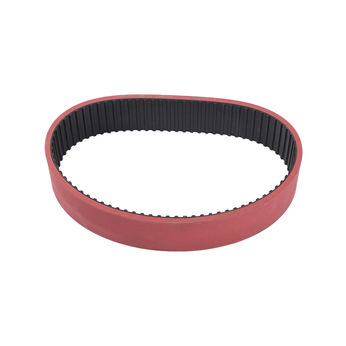 View More
Thickened timing belt
-
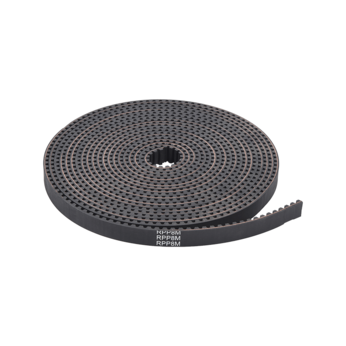 View More
Open Timing Belt
-
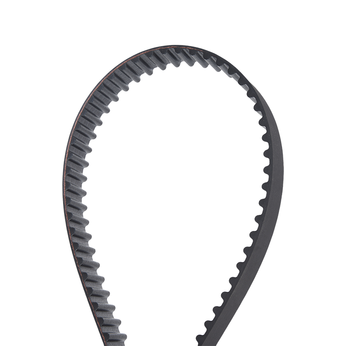 View More
Automotive V-belt
-
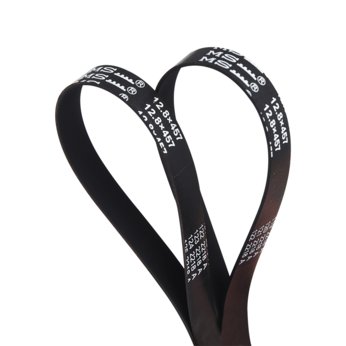 View More
Rubber Flat Belt
-
 View More
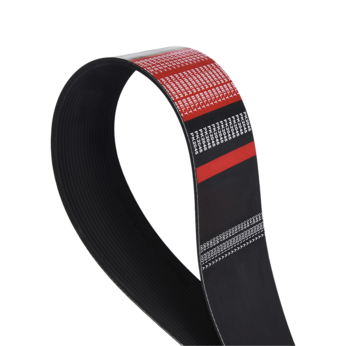
Ribbed Belt
-
 View More
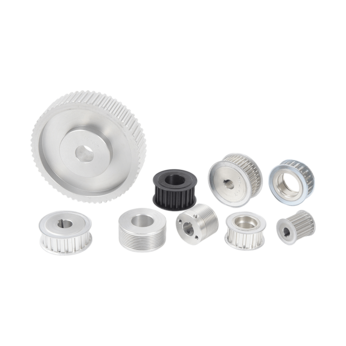
Synchronous Pulley
-
 View More
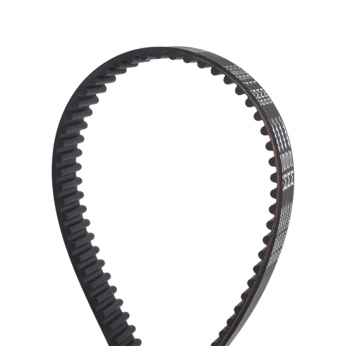
Arc tooth industrial rubber synchronous belt
-
View More
Automotive timing belt

Do you have a question? Feel free to contact!
 Tel: +86-0574-62498188 62497298
 Fax: +86-0574-62497297
 E-mail:
  Add: No. 65, Middle Jinniu Road, Moushan Town, Yuyao City, Zhejiang Province, China
Copyright © Ningbo GUL TZ Rubber Belt Co., Ltd. All rights reserved.

OEM Rubber Driving belts Manufacturers
