
 En
En  English
 简体中文
简体中文
Commonly Used Rubber Types in Conveyor Belts: How to Choose the Right One
A maintenance supervisor at a stone-crushing plant called us last spring with a familiar frustration. The conveyor belt she had purchased from a local distributor was barely six months old, and the top cover was already showing deep gouges down the centre of the belt. The supplier had sold it as a “heavy-duty belt.” The price was right, the width was correct, the carcass had enough plies — and yet the belt was failing at about a third of its expected service life.
When we asked for one detail — what kind of rubber compound was used — she did not know. Neither, it turned out, had the distributor.
The rubber compound is not a minor specification on a conveyor belt data sheet. It is the single biggest factor that decides whether a belt survives five years or five months. The most common rubber types used in conveyor belts are natural rubber (NR), styrene-butadiene rubber (SBR), nitrile rubber (NBR), neoprene (CR), EPDM, butyl rubber, and silicone rubber. Each one exists for a reason, and matching the compound to your conveyed material and operating environment is the essence of selecting a good conveyor belt.
Since 1992, our team at Ningbo GUL TZ Rubber Belt Co., Ltd. has been manufacturing rubber belts, from flat belts and timing belts to multi-ribbed and V-belts. Rubber compounding is at the core of everything we make, and the same material logic that governs our transmission belts applies to conveyor belt covers. In this article, I will walk you through the rubber types that are most commonly used in conveyor belts, how they compare, and how to match them to your application.
Key point: The rubber cover is the first line of defence for a conveyor belt. Choose the compound that matches your material and environment — not the cheapest belt that fits the dimensions.
Why the Rubber Compound Determines Conveyor Belt Life
Before comparing rubber types, we need to understand what a conveyor belt is made of and which part actually does the work.
A typical rubber conveyor belt has three structural layers:
- Top cover rubber — the surface that comes into contact with the conveyed material. It absorbs abrasion, impact, heat, oil, and chemicals.
- Carcass — the internal reinforcement, usually woven polyester or nylon fabric plies or steel cords. The carcass provides tensile strength and dimensional stability, but it has almost no resistance to abrasion or impact on its own.
- Bottom cover rubber — protects the carcass from the pulleys, idlers, and any spillage on the return run.
Every plied belt also contains a skim coat — a thin rubber layer between fabric plies that bonds the carcass together. In steel-cord belts, a core rubber surrounds each cord.
Now, the key point: the cover rubber determines how the belt interacts with the material you are conveying. If the material is sharp, the cover must resist cutting and tearing. If it is hot, the cover must resist thermal aging. If it is oily, the cover must not swell or soften. If the belt runs outdoors under the sun, the cover must resist ozone cracking. And if the operation carries a fire risk, the cover must be flame-retardant.
The carcass does not see the material. The cover does. When a belt fails prematurely, it is almost always the cover rubber that fails first.
Here is the practical conclusion: you cannot judge a conveyor belt by its carcass strength alone. Two belts with identical tensile ratings can have completely different service lives if their rubber compounds are different. A 500/3 belt with an abrasion-resistant natural rubber cover will behave very differently from a 500/3 belt with a general-purpose SBR cover in a gritty environment.
In our experience of manufacturing rubber products for more than three decades, the performance gap can be two to one, or even more, between a correctly compounded belt and a generic belt sold at the same price. That is why understanding rubber types is not an academic exercise; it is a purchasing decision that affects your operating cost.
Common Rubber Types Used in Conveyor Belts
Seven elastomer families dominate conveyor belt cover compounds. They are listed here in approximate order of how frequently they appear in real installations.
1. Natural Rubber (NR)
Natural rubber is the original conveyor belt material, and it is still the best choice for the toughest mechanical duty. It is tapped from Hevea brasiliensis trees and processed into high-molecular-weight polyisoprene.
What makes NR special:
- Excellent tensile strength — among the highest of all elastomers, typically 25 to 30 MPa in a well-compounded cover.
- Outstanding tear resistance and cut-growth resistance. This matters when conveying sharp-edged rocks, scrap metal, or demolition waste.
- Very good abrasion resistance, although SBR can match it in dry sliding conditions.
- Excellent flexibility at low temperatures, down to approximately minus 50 degrees Celsius.
- High rebound and low heat build-up under flexing.
Limitations: Natural rubber has poor resistance to oils, solvents, ozone, and ultraviolet light. It will swell in contact with petroleum products and will crack rapidly if exposed to sunlight and ozone without protective antioxidants. Its continuous heat resistance is limited to roughly 80 degrees Celsius.
Where you see it: Mining and quarrying belts carrying rock, ore, and aggregate; steel plants handling scrap; sand and gravel plants; any application with severe impact or tearing risk. NR-rich compounds are also used in high-flexion applications like shuttle belts and stacker belts.
2. Styrene-Butadiene Rubber (SBR)
SBR is the workhorse of the conveyor belt industry. It is a synthetic rubber produced by copolymerizing styrene and butadiene, and it accounts for the largest share of the general industrial belt market.
What makes SBR popular:
- Excellent abrasion resistance in dry conditions — often equal to or better than natural rubber in sand-and-gravel applications.
- Readily compounded with reinforcing fillers like carbon black, allowing the manufacturer to adjust hardness from soft cushion covers to hard, highly abrasion-resistant skins.
- Good tensile strength and tear strength, though lower than NR in pure gum compounds.
- Moderate cost, making it the natural default for general-purpose belting.
Limitations: Like NR, SBR has poor oil, solvent, ozone, and weathering resistance. It also has lower low-temperature flexibility than NR — roughly minus 35 to minus 40 degrees Celsius in typical compounds — and slightly higher heat buildup.
Where you see it: General-purpose belts in warehouses, cement plants, power plants, and agricultural handling. SBR covers dominate the standard conveyor belt market, usually specified as Grade M or Grade N under DIN 22102 standards.
3. Nitrile Rubber (NBR)
Nitrile rubber, also known as nitrile-butadiene rubber, is the standard solution when oil resistance is non-negotiable. It is a copolymer of butadiene and acrylonitrile, and its oil resistance increases with acrylonitrile content.
What makes NBR valuable:
- Excellent resistance to petroleum oils, mineral oils, greases, and many hydrocarbon solvents.
- Good abrasion resistance — generally better than neoprene and close to SBR in many test conditions.
- Good resistance to water and diluted acids.
- Higher acrylonitrile grades maintain good oil resistance up to around 100 degrees Celsius.
Limitations: NBR has poor resistance to ozone and weathering over long outdoor exposure, and its low-temperature flexibility degrades as acrylonitrile content rises. It is also more expensive than SBR and NR.
Where you see it: Conveyors handling oily machined parts, recycled oil-bearing materials, rubber crumb, and certain food products where animal or vegetable oils are present. NBR covers are also common on belt scrapers and on rollers that contact oily surfaces.
4. Neoprene (Chloroprene Rubber, CR)
Neoprene is the balanced elastomer in the conveyor belt world. It was one of the first synthetic rubbers and remains highly valued for its combination of moderate oil resistance, good flame resistance, and excellent weathering resistance.
What makes CR useful:
- Moderate oil and grease resistance — not as high as NBR but far better than NR or SBR.
- Inherent flame resistance. Neoprene carbonizes and self-extinguishes more readily than hydrocarbon rubbers.
- Good ozone and weathering resistance, which makes it suitable for outdoor exposure.
- Service temperature from about minus 35 to 110 degrees Celsius, with intermittent peaks to 120 degrees Celsius.
Limitations: Neoprene is more expensive than SBR and has lower resistance to aromatic hydrocarbons than NBR. It also has a higher specific gravity, meaning a belt cover weighs more for the same volume.
Where you see it: Mining belts requiring flame resistance, especially in underground coal operations; outdoor conveyor installations; chemical plants where moderate oil and ozone exposure occur together.
5. EPDM Rubber
Ethylene-propylene-diene monomer (EPDM) rubber is the specialist for heat, ozone, and weathering resistance.
What makes EPDM stand out:
- Outstanding heat resistance — continuous service at 100 to 120 degrees Celsius, with intermittent peaks to 150 degrees Celsius in well-compounded products.
- Excellent ozone resistance. EPDM does not crack from atmospheric ozone even after years outdoors.
- Very good resistance to steam, hot water, and many polar chemicals such as diluted acids, alkalis, and ketones.
- Good low-temperature flexibility, to about minus 45 degrees Celsius in properly formulated compounds.
Limitations: EPDM has poor resistance to petroleum oils and fuels. It is also somewhat more expensive than SBR.
Where you see it: Conveyors carrying hot clinker, foundry sand, sintered ore, hot ash, or recycled hot materials. EPDM covers also appear on belts that run outdoors in strong sunlight for years and in power plants that handle steam-laden materials.
6. Butyl Rubber (IIR)
Butyl rubber is a specialty polymer made from isobutylene and a small amount of isoprene. Its defining trait is very low gas permeability.
What makes butyl different:
- Exceptional air and gas impermeability. This is why it is used in inner tubes and vacuum applications.
- Good heat resistance, up to approximately 120 degrees Celsius in some compounds.
- Excellent dampening properties — it absorbs vibration and shock effectively.
- Good ozone resistance when properly protected.
Limitations: Butyl has poor resistance to petroleum oils, low strength compared to NR, and a tendency to cold-flow under sustained pressure. It is also more expensive.
Where you see it in conveying: Butyl is rarely used as a full conveyor cover. You will find it in specialty belts that must resist gas permeation, in cleated or vacuum-assisted conveying systems, and in applications where dampening of impact is important. It is also used in splicing materials for heat-resistant belts.
7. Silicone Rubber (SiR)
Silicone rubber is a completely different polymer family based on a silicon-oxygen backbone rather than carbon-carbon bonds.
What makes silicone unique:
- Extremely wide service temperature range — from about minus 60 to 200 degrees Celsius, with some grades rated to 230 degrees Celsius.
- Excellent high-temperature stability over long periods.
- Inert, non-toxic, and available in FDA-compliant formulations for food contact.
- Good release properties — materials do not stick readily to silicone surfaces.
Limitations: Silicone rubber has significantly lower tensile strength and abrasion resistance than NR, SBR, or CR. It is also the most expensive elastomer on this list.
Where you see it: Food and pharmaceutical conveyor belts, bakery oven belts, heat-sealing tables, and applications where the belt must tolerate extreme heat or release sticky products. In heavy material handling, silicone covers are rarely used because they cannot survive impact and abrasion.
Rubber Type Comparison at a Glance
To help you evaluate the main options side by side, here is a summary table covering the properties that matter most in conveyor belt selection.
| Rubber Type | Abrasion | Oil | Heat | Weathering / Ozone | Typical Conveyor Application | Relative Cost |
|---|---|---|---|---|---|---|
| Natural Rubber (NR) | Excellent | Poor | Fair to 80°C | Poor | Rock, ore, scrap, high impact | Low |
| SBR | Excellent | Poor | Fair to 80°C | Poor | Sand, gravel, general bulk goods | Low |
| NBR | Good | Excellent | Good to 100°C | Fair | Oily parts, oily seeds, recycled materials | Medium |
| Neoprene (CR) | Good | Moderate | Good to 110°C | Good | Underground mining, outdoor, flame-resistant | Medium |
| EPDM | Fair | Poor | Excellent to 150°C | Excellent | Hot clinker, foundry, outdoor, steam | Medium-High |
| Butyl (IIR) | Fair | Poor | Good to 120°C | Good | Vacuum conveying, gas impermeability | High |
| Silicone (SiR) | Poor | Fair | Excellent to 200°C+ | Excellent | Food, pharmaceutical, heat-sealing | Very High |
The chart set below gives a quick visual sense of how the seven elastomers rank in the three properties that cause most conveyor belt failures: abrasion, oil attack, and heat aging. The index is relative, with 100 representing the best-performing material in that category.
Relative Abrasion Resistance (higher is better)
NR
100
SBR
95
NBR
80
CR
75
EPDM
55
IIR
50
SiR
25
Relative Oil Resistance (higher is better)
NBR
100
CR
70
SiR
60
EPDM
30
NR
15
SBR
15
IIR
10
Relative Heat Resistance (higher is better)
SiR
100
EPDM
90
CR
65
NBR
60
IIR
60
NR
40
SBR
40
DIN and ISO belt grade classifications
In addition to the polymer type, conveyor belts are often labelled with a letter grade that describes the performance level of the cover compound. These grades come from standards like DIN 22102 in Europe, ISO 10247 internationally, AS 1332 in Australia, and similar systems in North America. The letters do not indicate the rubber type; they indicate what the compound was tested and certified to do.
- Grade M and N — General purpose. These are the default grades for ordinary duty belts carrying non-abrasive or moderately abrasive bulk materials.
- Grade A — Abrasion-resistant. The maximum allowed abrasion loss is lower, meaning the cover survives longer against gritty materials. This is often where you will see high-wear SBR or NR compounds.
- Grade E — Electrostatic conductivity. The belt cover must be electrically conductive enough to dissipate static charge, important in explosive atmospheres. Conductive carbon black is added to the compound.
- Grade F — Flame-resistant. The belt cover must self-extinguish in the standardized flame test, which is critical in underground mining and similar high-risk environments.
- Grade S — Combined static conductivity and flame resistance.
- Grade Z — Special properties, typically reserved for compounds with very specific heat, oil, or chemical resistance.
When you buy a conveyor belt, the wear-resistance grade and flame or static certifications are printed on the belt cover. Ask the supplier for the test report. A genuine DIN 53516 or ISO 4649 abrasion number tells you far more than the marketing word “heavy duty.”
How to Select the Right Rubber for Your Conveyor Belt
The selection process can be broken down into five questions. Answer them honestly, and the right rubber type becomes fairly obvious.
Step 1 — What are you conveying?
Consider the physical characteristics of the material: particle size, shape, weight, abrasiveness, moisture, temperature, and oil content.
Sharp, heavy, abrasive materials like crushed stone or scrap metal call for thick NR or NR/SBR covers with high tear and cut resistance. Slippery, oily materials like soaked seeds or machined parts call for NBR. Hot materials like foundry sand require EPDM. Here is how we typically map materials to compounds:
- Large sharp rocks, high impact — NR-rich cover
- Dry sand, gravel, cement — SBR or NR/SBR blend, Grade A abrasion
- Oily parts, oily grains — NBR cover
- Hot ash, clinker, sinter — EPDM cover
- Underground coal — CR or flame-retardant SBR, Grade F or S
- Food products — FDA-compliant NR, NBR, or silicone, depending on oil and temperature
Step 2 — What is the operating environment?
The belt does not only see the conveyed material; it sees the surroundings. Outdoors, ozone, ultraviolet radiation, rain, and temperature swings attack the rubber. In that case, EPDM or CR outperform NR and SBR despite having lower mechanical strength. A belt installed inside a dry, temperature-controlled facility has far fewer environmental demands than one running through a hot, humid, or corrosive atmosphere.
Step 3 — What do the regulations require?
Check whether your operation is subject to mandatory standards. Underground mines typically require flame-resistant and antistatic belts meeting ISO 340 or national equivalents. Food plants require belts that comply with FDA 21 CFR 177.2600 or the EU framework regulation 1935/2004. Pharmaceutical applications may require even stricter compliance. These regulations override material preference, so check them before you start comparing abrasion numbers.
Step 4 — What are the mechanical conditions?
Belt speed, pulley diameter, and impact energy influence the compound’s required hardness, elasticity, and thickness. High-speed belts with small pulleys demand compounds with good flex-fatigue resistance. Deep troughing angles demand good flexibility and low heat buildup. NR and SBR are generally best here; EPDM has a shorter flex life. If your conveyor line requires exact positioning or synchronized multi-station movement, a toothed belt construction becomes the correct path because it eliminates slip and holds pitch accurately over the full length of the line.
Step 5 — What is the real lifetime cost?
A cheaper SBR belt can be the most expensive choice if it fails in eight months, while an EPDM belt costing 30 percent more may run for four years. Compare the cost per ton of material conveyed, not the invoice price. Include downtime, labour, and belt replacement costs in that comparison. A premium compound is not an unnecessary expense; it is an insurance policy against unplanned stoppages.
If your application is a straightforward flat conveying line with moderate loads and a clean environment, our rubber flat belt is a practical example of a belt built for reliable service in general material handling and light industrial conveying. The same compounding discipline goes into every belt we produce.
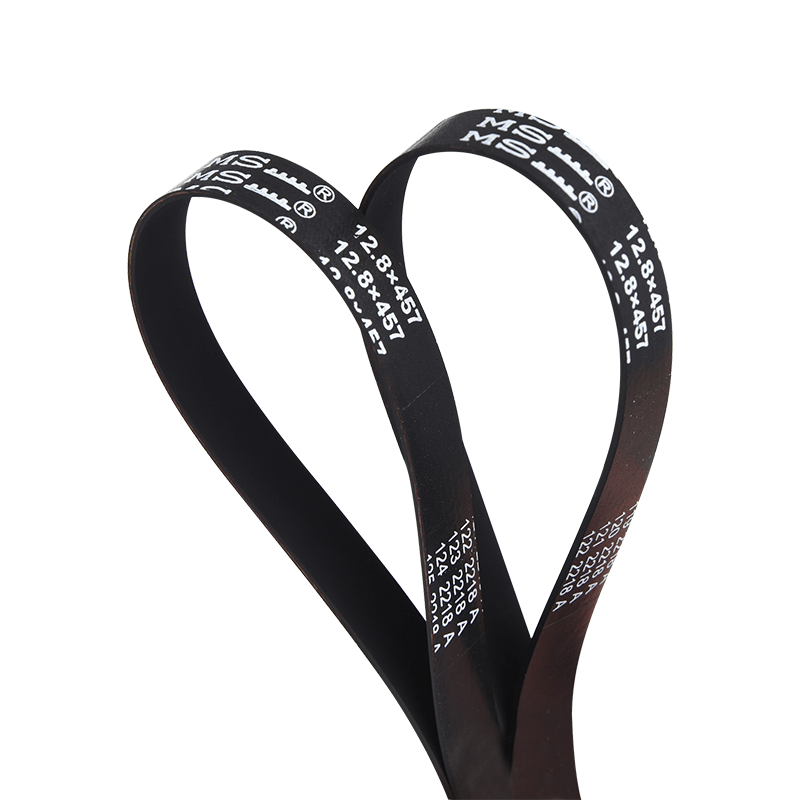 General-Purpose Rubber Flat Conveyor BeltA practical flat belt for straightforward conveying lines with moderate loads, built with the same compounding discipline used across the manufacturer's full product range.View Product →
What Good Rubber Compounding Looks Like in Production
Selecting the right polymer is only part of the story. The actual rubber compound in a conveyor belt is a carefully measured mixture. A typical conveyor belt cover compound contains:
- Polymer — one or more of the rubbers discussed above, often blended. For example, NR/SBR blends are common to balance tear resistance and abrasion.
- Reinforcing fillers — carbon black is the mainstay. The type and loading of carbon black directly control abrasion resistance, tensile strength, and hardness.
- Plasticizers and softeners — adjust hardness, flexibility at low temperature, and processability.
- Vulcanizing agents and accelerators — sulfur and sulfur-donor systems create crosslinks between polymer chains. The crosslink density determines whether the cover is soft and elastic or hard and resistant to cutting.
- Protective additives — antioxidants and antiozonants slow down aging, especially in outdoor service.
- Special-function additives — flame retardants, antistatic agents, or release agents depending on the required grade.
The phrase “rubber compound” is sometimes shortened to just “rubber” on a data sheet, but the difference between a good and a bad compound with the same base polymer can be enormous. Two SBR covers can have DIN 53516 abrasion losses of 120 cubic millimetres and 350 cubic millimetres. The first will last years; the second will be gone in months. That is why the compounding recipe is a closely guarded part of any serious rubber manufacturer’s process.
Vulcanization matters as much as the formula
Vulcanization — the crosslinking of polymer chains under heat and pressure — determines whether the rubber behaves like a durable engineering material or like an overgrown eraser. In conveyor belt manufacturing, the cover is vulcanized together with the carcass in a long heated press. Temperature, time, and pressure must be precisely controlled. Under-vulcanization produces a soft, high-friction cover that wears quickly. Over-vulcanization makes the cover hard and brittle, prone to cracking at the edges.
As a manufacturer that cures rubber every day, our team treats the vulcanization curve as equally important as the compound formula. The same curing philosophy goes into our thickened industrial timing belts, which need high shear resistance in heavy-load conveying and positioning systems. If you are comparing conveyor belt suppliers, ask them how they control the vulcanization profile and what their batch-to-batch variation is.
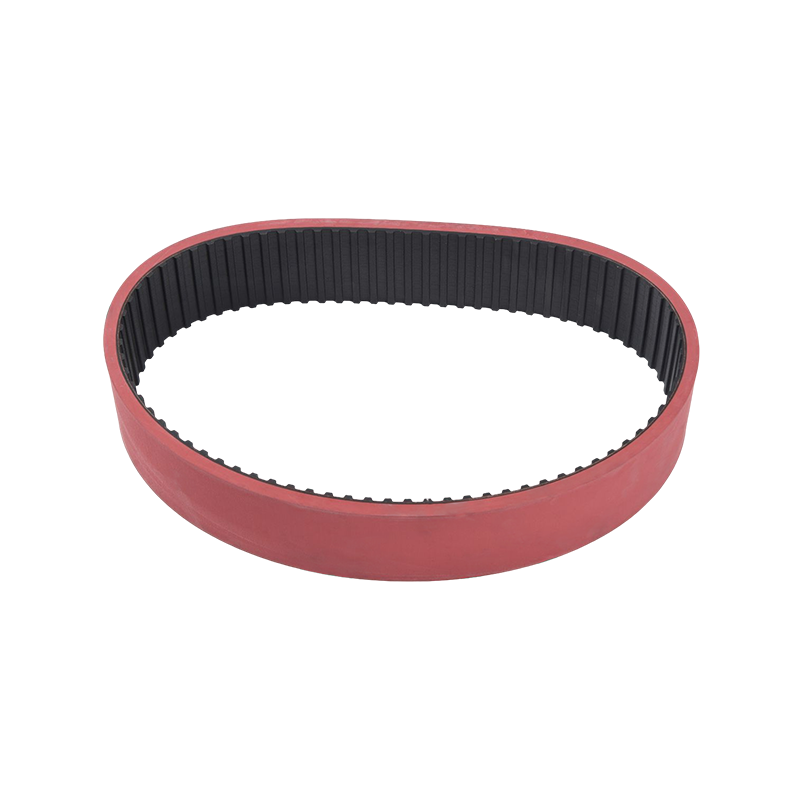 Thickened Industrial Timing Belt for Heavy LoadsThis thickened timing belt is designed for high shear resistance in heavy-load conveying and positioning systems, reflecting careful control of the vulcanization profile.View Product →
Also ask for the compound hardness, tensile strength, elongation at break, and abrasion loss for the specific belt you plan to buy. A reliable supplier will provide this data, either from their own laboratory or from an independent test institute. If a supplier cannot answer these questions in numbers, treat that as a warning sign.
Storage, Maintenance, and Service Life of Rubber Conveyor Belts
Even the best compound will fail early if the belt is stored or operated incorrectly. Here are the practical points we share with our customers.
Storage
- Store the belt in its original wrapping in a cool, dry room with a temperature of 15 to 25 degrees Celsius.
- Keep it away from direct sunlight, ultraviolet lamps, ozone-producing electric motors, and solvents.
- Do not stack heavy objects on the roll. Support the roll horizontally on a shaft or on its flat sides.
- Use the belt within two years of shipment. Rubber ages even in storage; the surface oxidizes and hardens slowly over time.
Installation and operation
- Ensure the splice is cured correctly. A bad splice creates stress concentration, and the cover will tear near the joint long before the rest of the belt wears out.
- Monitor belt tracking and tension. Excessive tension may not snap the carcass, but it will accelerate cover wear and create cracking at the edges.
- Keep the return side clean. Material trapped between the belt and the tail pulley is a leading cause of cover damage.
- Control impact zones. If large lumps drop from a great height, use an impact bed or a thicker cover. Even natural rubber cannot absorb unlimited impact energy.
For conveying lines that require fixed indexing or precise position locking, a reinforced rubber timing belt can be a better choice than a smooth cover belt. Timing belts mesh with pulleys, eliminating slip and maintaining the exact pitch over the entire line. This construction is common in assembly conveyors, packaging lines, and automated material-handling systems.
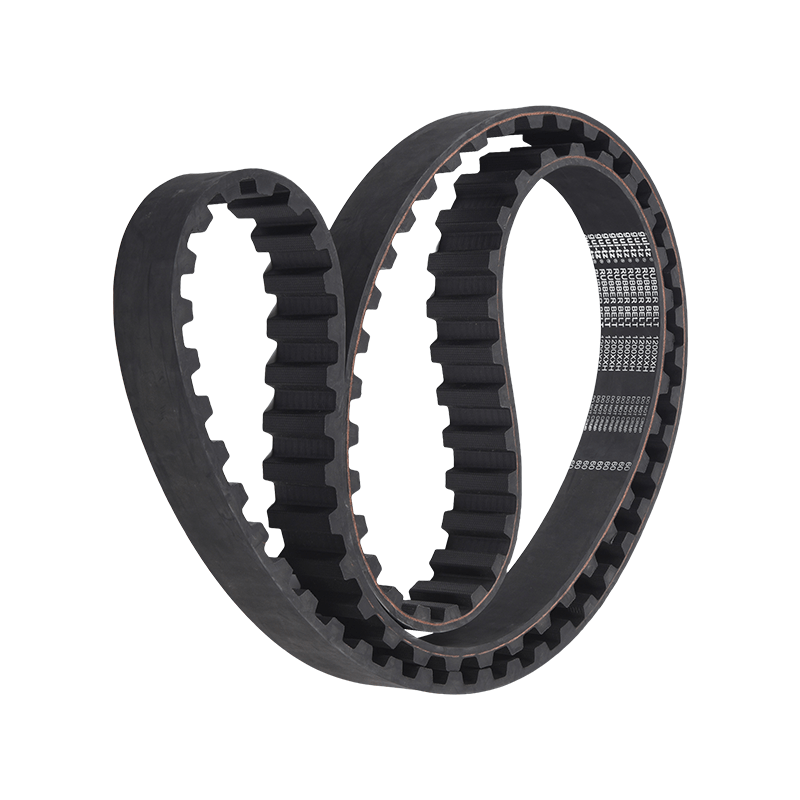 T-Type Rubber Synchronous Timing BeltA reinforced timing belt that meshes with pulleys to eliminate slip and maintain exact pitch, ideal for assembly conveyors, packaging lines, and automated material handling.View Product →
Signs that the rubber compound is failing
- Surface hardening and cracking usually indicate heat aging or ozone attack. If the cracks appear along the belt length in a regular pattern, ozone is the likely culprit, and EPDM would be a more suitable cover.
- Swelling, softening, or a sponge-like texture means oil or solvent is attacking the rubber. Switching to NBR or CR is the right move.
- Rapid wear with a rough, torn surface means the compound is too soft for the abrasiveness of the material. A harder, high-abrasion-grade SBR or NR compound should be specified next time.
Frequently Asked Questions
What is the most common rubber used in conveyor belts?
SBR is the most common. It offers the best balance of abrasion resistance and cost, making it the default for general-purpose conveyor belts. Natural rubber is the most common choice when tear resistance and impact resistance are critical, particularly in mining and quarrying applications.
How do I know which rubber type is best for my conveyor belt?
Start by listing the conveyed material and environment: abrasiveness, oil or chemical exposure, maximum temperature, outdoor or indoor use, and any legal requirements such as flame resistance or food contact. Then match those factors to the comparison table in this article. When in doubt, consult a manufacturer that compounds its own rubber and can run laboratory tests on your specific material.
Can one rubber type handle oil and high heat at the same time?
Not perfectly. EPDM handles heat but fails with oil. NBR handles oil but has limited heat resistance. CR offers a compromise but is not the best in either category. In demanding cases, some manufacturers use special blends or a thicker NBR top cover over an EPDM-impregnated carcass. The real solution is to be honest about the worst-case operating conditions and select for the dominant stress factor first.
For a broader look at rubber and industrial conveyor belt types, see our related guide on rubber and industrial conveyor belt types.
What does “food-grade” mean for a rubber conveyor belt?
Food-grade compounds comply with regulations like FDA 21 CFR 177.2600 or the EU framework regulation 1935/2004. They use polymers and additives that are safe for repeated food contact, and they do not contain plasticizers or accelerators that could migrate into food. Silicone rubber and NBR are common choices for food-handling belts, depending on oil, temperature, and cleaning chemicals. The belt surface must also be cleanable and resistant to the washdown agents used in the facility.
How long should a rubber conveyor belt last?
There is no single number. A well-selected belt operating under moderate conditions can last 5 to 10 years. In severe mining duty, 1 to 3 years is common. The service life depends on compound selection, cover thickness, splicing quality, maintenance, and the severity of the conveyed material. The most actionable metric is abrasion loss in the DIN 53516 or ISO 4649 test, combined with a realistic look at your impact and edge-wear conditions.
What is the difference between Grade M and Grade A belts?
Grade M is a general-purpose grade with a moderate abrasion loss limit, typically a maximum of 250 cubic millimetres according to DIN 22102. Grade A is an abrasion-resistant grade with a stricter limit, usually a maximum of 120 cubic millimetres. Grade A belts are made with harder, wear-resistant compounds and last longer when conveying abrasive materials. If your operation handles sand, gravel, ore, or cement, the extra cost of Grade A is usually repaid many times over.
Partner with a Rubber Manufacturer That Understands Compounds
Choosing the right rubber for a conveyor belt is not complicated once you know what to ask: what are you conveying, what are the operating temperatures, is oil present, do you need flame or antistatic properties, and does the belt need to meet food regulations? Those answers will point you to NR, SBR, NBR, CR, EPDM, or a blended compound. The charts and tables in this article give you a reference for the conversation you should have with your supplier.
Since 1992, Ningbo GUL TZ Rubber Belt Co., Ltd. has been manufacturing rubber belts in Ningbo, China. We are a national high-technology enterprise, accredited with ISO 9001, ISO 14001, and ISO 45001, and we have participated in the drafting of national and industry standards for rubber belting. Our product range covers industrial and automotive timing belts, multi-ribbed belts, V-belts, rubber flat belts, and pulleys. The same compounding expertise that goes into every belt we make is ready to support your conveyor project. Learn more about our company and manufacturing history.
If you are selecting a conveyor belt or any rubber belt for a specific application, send us your material description and operating conditions. We can recommend a compound, provide test data, and supply a belt that meets the requirements of your job.
Hot Products
-
 View More
-
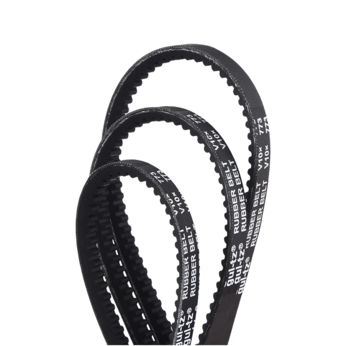 View More
V-belt For Industry
-
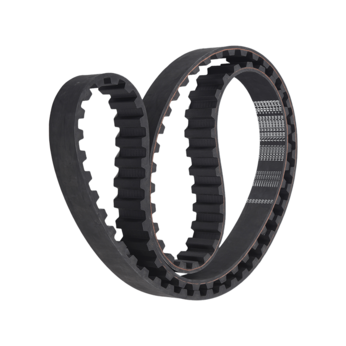 View More
T Type Industry Rubber Synchronous Belt
-
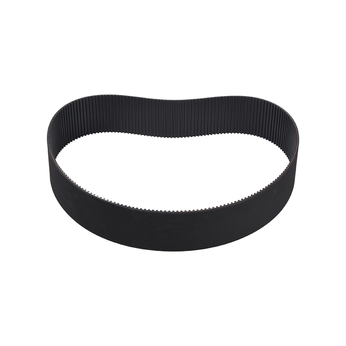 View More
Toothed wedge belt
-
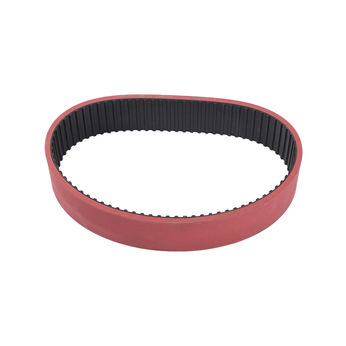 View More
Thickened timing belt
-
 View More
Open Timing Belt
-
 View More
Automotive V-belt
-
 View More
Rubber Flat Belt
-
 View More
Ribbed Belt
-
 View More
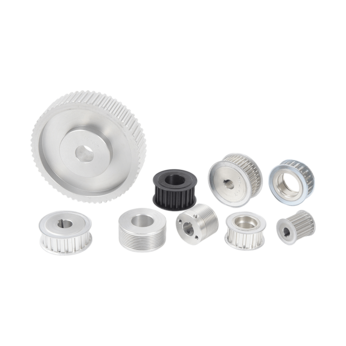
Synchronous Pulley
-
 View More
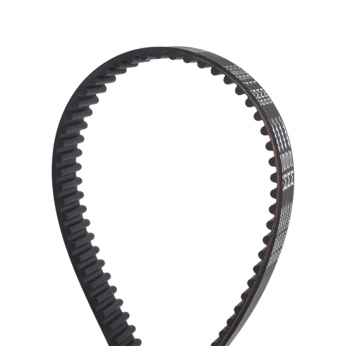
Arc tooth industrial rubber synchronous belt
-
View More
Automotive timing belt

Do you have a question? Feel free to contact!
 Tel: +86-0574-62498188 62497298
 Fax: +86-0574-62497297
 E-mail:
  Add: No. 65, Middle Jinniu Road, Moushan Town, Yuyao City, Zhejiang Province, China
Copyright © Ningbo GUL TZ Rubber Belt Co., Ltd. All rights reserved.

OEM Rubber Driving belts Manufacturers
