
 En
En  English
 简体中文
简体中文
Why Do Automotive Timing Belts Fail and How to Choose the Right One
High-Efficiency Transmission and Precise Synchronization: Deep Dive into the Core Mechanisms and Maintenance of Automotive Timing Belts
In modern internal combustion engines, the opening and closing of valves and the reciprocating movement of pistons must maintain a near-perfect spatial and temporal order. As the core link of this precise synchronization, the car toothed belt, commonly referred to as the vehicle timing belt, carries an irreplaceable responsibility. This article will analyze this core component from professional perspectives, including structural principles, common fault diagnosis, and key technical parameter comparisons, aiming to provide precise maintenance and selection references for technicians and vehicle owners.
Working Principle and Material Composition of car parts timing belt
The car parts timing belt is a special type of auto timing belt featuring precisely distributed rubber teeth on its surface, which mesh without slippage with the gears of the engine crankshaft and camshaft. Its core responsibility is to ensure that while the crankshaft rotates two revolutions, the camshaft rotates exactly one revolution, thereby realizing the opening or closing of the intake and exhaust valves at the exact moment.
To withstand long-term alternating stress and high-temperature erosion in the engine bay, high-quality Automotive Timing Belts must meet extremely strict technical requirements regarding material structure:
- Back Rubber Layer: Usually made of highly heat-resistant and oil-resistant chloroprene rubber (CR) or hydrogenated nitrile butadiene rubber (HNBR), effectively resisting the destruction of the belt body caused by external oil stains and alternating cold and heat.
- Tensile Layer (Cord): Consists of high-strength fiberglass or aramid fiber cords. This layer is the core for bearing tension, ensuring that the belt does not stretch or deform during long-term high-speed operation.
- Tooth Fabric Protective Layer: Covered with a layer of highly wear-resistant special nylon canvas on the surface of the rubber teeth to reduce frictional resistance during meshing and significantly increase tooth profile life.
Structural Parameters and Performance Comparison
Different types of vehicle timing belt designs have differences in tooth profile structure, which directly determine their transmission torque, anti-skipping capabilities, and operational noise levels. The following table provides a comparison of the parameters of the two most common tooth profiles in the market:
| Parameters/Features | Trapezoidal Tooth | Curvilinear Tooth |
| Tooth Geometry | Straight tooth flanks with a flat top | Continuous circular arc transition along flanks and root |
| Stress Distribution | Stress easily concentrates at the tooth root; limited shear force endurance | Uniform stress distribution with strong shear resistance capabilities |
| Torque Transmission | Standard torque transmission; suitable for medium-to-low load engines | High torque transmission; suitable for high compression ratio, high-performance engines |
| Anti-skipping Performance | Moderate resistance to tooth skipping under high speed and heavy load | Deep meshing with excellent anti-skipping and anti-slip performance |
| Operational Noise Level | Slightly larger meshing impact, resulting in noticeable noise | Smooth meshing, significantly reducing operational noise levels |
auto repair timing belt Deep Guide: Fault Symptoms and Root Cause Analysis
Once the auto timing belt suffers from wear or aging, it leads to dropped engine power and increased fuel consumption at best, or tooth skipping and outright belt breakage at worst. For interference engines, a broken belt means the pistons will directly strike the open valves at high speeds, resulting in bent valves, cracked pistons, or even a scrapped cylinder block. Therefore, when performing auto repair timing belt related maintenance, identifying the following typical fault phenomena is crucial:
Rubber Tooth Root Cracking or Shear Detachment
Micro-cracks appear at the root of the teeth, and in severe cases, several rubber teeth shear and break off directly from the base belt. This is usually caused by long-term overload operation, excessive tension during installation, or an instantaneous excessive shear force due to foreign matter jammed inside the timing system.
Backside Wear and Cracking
The smooth layer on the back of the belt appears hardened, cracked, or shows abnormal wear marks. This happens due to long-term exposure to extremely high temperatures in the engine bay environment causing the rubber to harden and age, or idler and tensioner bearings wearing out and seizing, creating severe sliding friction against the back of the belt.
Edge Wear and Belt Delamination
The edges on both sides of the belt show fraying, fuzzing, or the belt width becomes narrower. This indicates that the surfaces of the pulleys in the timing drive system are not parallel, or the axes are misaligned, causing the belt to constantly drift to one side and rub continuously against the timing cover or pulley flanges during operation.
Precise Installation and Maintenance Standards
To ensure that Automotive Timing Belts achieve their expected service life, strict technical specifications must be followed during the replacement and installation process.
First, precise adjustment of the tension force is the key factor determining system life. Insufficient tension will cause tooth skipping during rapid deceleration or startup; excessive tension will keep the fiberglass cords under a long-term overload state of tension, and accelerate the wear of the drive bearings. During installation, it is recommended to use a professional acoustic tension meter or mechanical tension tools to precisely adjust the tightness to the value specified in the manufacturer technical manual.
Second, when replacing a brand new car toothed belt, the tensioner pulley and idler pulley must be replaced synchronously. Because these rolling bearings share the same working cycle as the belt, their internal grease gradually dries out under long-term high temperatures. Keeping old bearings while only replacing the belt often causes the new belt to fail prematurely within a short period due to bearing seizure. In addition, the crankshaft oil seal and camshaft oil seal within the drive area must be carefully inspected. If any engine oil leakage is found, the oil stains must be eliminated and the oil seals replaced first, because any mineral oil erosion will cause the rubber to quickly swell and soften, completely destroying the shear strength of the belt.
Hot Products
-
 View More
-
 View More
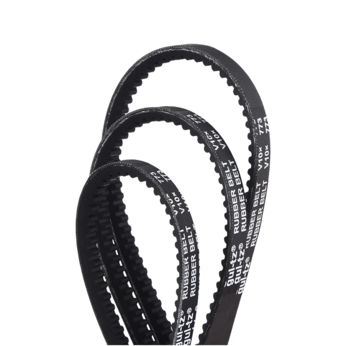
V-belt For Industry
-
 View More
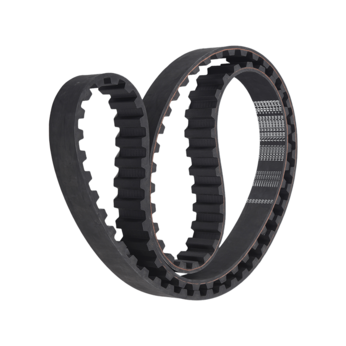
T Type Industry Rubber Synchronous Belt
-
 View More
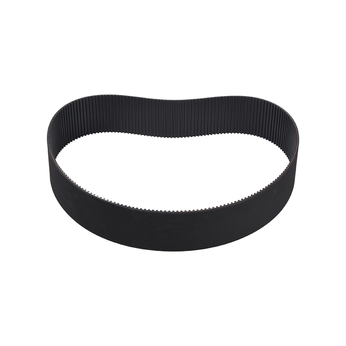
Toothed wedge belt
-
 View More
Thickened timing belt
-
 View More
Open Timing Belt
-
 View More
Automotive V-belt
-
 View More
Rubber Flat Belt
-
 View More
Ribbed Belt
-
 View More
Synchronous Pulley
-
 View More
Arc tooth industrial rubber synchronous belt
-
View More
Automotive timing belt

Do you have a question? Feel free to contact!
 Tel: +86-0574-62498188 62497298
 Fax: +86-0574-62497297
 E-mail:
  Add: No. 65, Middle Jinniu Road, Moushan Town, Yuyao City, Zhejiang Province, China
Copyright © Ningbo GUL TZ Rubber Belt Co., Ltd. All rights reserved.

OEM Rubber Driving belts Manufacturers
