
 En
En  English
 简体中文
简体中文
What is the Difference Between Poly V Belt Types
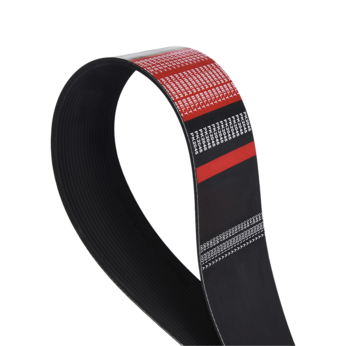
The development of modern power transmission systems has led to the widespread adoption of the V-Ribbed Belts, a component that combines the high flexibility of flat belts with the superior power transmission performance of V-belts. In industrial and mechanical engineering, these are often referred to as poly v ribbed belt or ribbed drive belt. Their unique design consists of a multi-grooved surface that provides a significantly larger contact area compared to standard belts, ensuring stable power delivery even in high-speed applications.
Professional Structure and Material Composition
A high-quality v ribbed drive belt is engineered with multiple layers to handle diverse mechanical stresses. The top layer is typically made of high-modulus rubber compounds that protect the internal components from environmental wear. Below this lies the tension member, usually composed of polyester or aramid cords, which provides the necessary tensile strength and resistance to stretching. The ribs, which form the core of the poly v ribbed belt, are molded from synthetic rubber (often EPDM) to ensure heat resistance and durability. This specific architecture allows the belt to operate over small pulleys, a common requirement in compact engine designs where an automotive v ribbed belt is essential for driving multiple peripherals like the alternator and water pump.
Classification and Poly V Belt Types
Understanding the various poly v belt types is crucial for correct system integration. These belts are classified by their pitch—the distance between the centers of two adjacent ribs.
PH Type (Micro Pitch): This is a common micro ribbed v belt used in high-speed, light-duty applications. Its thin profile allows it to wrap around extremely small diameters, making it ideal for household appliances and medical equipment.
PJ Type (Light Duty): A versatile ribbed drive belt used in fitness equipment and small industrial machinery. It offers a balance between flexibility and power capacity.
PK Type (Automotive Standard): The definitive automotive v ribbed belt. It is designed to withstand the harsh conditions of an engine bay, including exposure to oil, high temperatures, and constant vibration.
PL and PM Types (Heavy Duty): These represent the larger end of the V-Ribbed Belts spectrum. They are utilized in heavy industrial plants, such as rock crushers and large compressors, where torque requirements are significantly higher.
Technical Parameter Comparison
The following data provides a technical overview of the physical dimensions and operational limits for different poly v belt types:
| Belt Type | Rib Pitch (mm) | Total Thickness (mm) | Min. Pulley Diameter (mm) | Max. Speed (m/s) |
| PH | 1.60 | 2.50 | 13 | 50 |
| PJ | 2.34 | 3.50 | 20 | 50 |
| PK | 3.56 | 4.50 | 45 | 50 |
| PL | 4.70 | 7.00 | 75 | 40 |
| PM | 9.40 | 13.00 | 180 | 35 |
Maintenance and Troubleshooting for V-Ribbed Drive Belt
To ensure the longevity of a poly v ribbed belt, regular inspection of the rib surface is mandatory. One frequent issue is rib cracking, which often occurs in an automotive v ribbed belt due to prolonged exposure to high under-hood temperatures. If cracks appear across the width of the ribs, the belt has reached its fatigue limit and requires immediate replacement.
Another common problem is pilling, where small particles of rubber accumulate in the belt grooves. This is often caused by misalignment of the pulleys or incorrect tensioning. Maintaining the precise tension of the V-Ribbed Belts is vital; under-tensioning leads to slippage and noise (squealing), while over-tensioning can cause premature bearing failure in the connected components. Using a micro ribbed v belt with the correct EPDM compound can mitigate many of these heat-related and wear-related issues in precision machinery.
Hot Products
-
 View More
-
 View More
V-belt For Industry
-
 View More
T Type Industry Rubber Synchronous Belt
-
 View More
Toothed wedge belt
-
 View More
Thickened timing belt
-
 View More
Open Timing Belt
-
 View More
Automotive V-belt
-
 View More
Rubber Flat Belt
-
 View More
Ribbed Belt
-
 View More
Synchronous Pulley
-
 View More
Arc tooth industrial rubber synchronous belt
-
View More
Automotive timing belt

Do you have a question? Feel free to contact!
 Tel: +86-0574-62498188 62497298
 Fax: +86-0574-62497297
 E-mail:
  Add: No. 65, Middle Jinniu Road, Moushan Town, Yuyao City, Zhejiang Province, China
Copyright © Ningbo GUL TZ Rubber Belt Co., Ltd. All rights reserved.

OEM Rubber Driving belts Manufacturers
