
 En
En  English
 简体中文
简体中文
How to Choose the Right Synchronous Timing Belts for High-Precision Industrial Transmission
In the field of modern mechanical transmission, Synchronous Timing Belts serve as core components for high-precision positioning and efficient power delivery, combining the advantages of chains, gears, and V-belts. For technical engineers and procurement professionals, a deep understanding of tooth structures, material properties, and the engagement principles of synchronous belts and pulleys is essential to ensure long-term equipment stability.
Impact of Tooth Profile Design on Transmission Efficiency
The core value of Synchronous Belts lies in their "synchronous" characteristic, which eliminates relative slip through the precise engagement between belt teeth and pulley grooves. Depending on the application scenario, synchronous belt types are generally divided into two categories: trapezoidal teeth and curvilinear (arc) teeth.
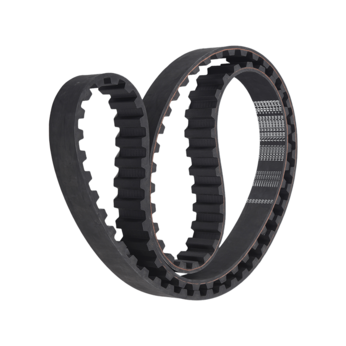
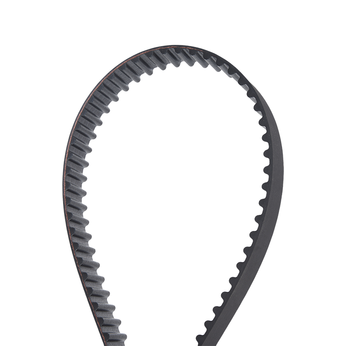
- Trapezoidal Tooth Belts: This is an early standard design suitable for light-load transmissions requiring extremely high positioning accuracy.
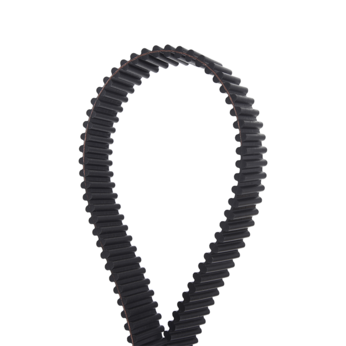
- Curvilinear (Arc) Tooth Belts: Such as high-torque synchronous belts, these offer more uniform stress distribution, significantly improving power transmission capacity and effectively preventing tooth jumping at high speeds.
For applications pursuing ultimate performance, continental synchronous belts utilize special synthetic materials and reinforced fiber cores, providing excellent oil resistance, wear resistance, and tensile strength. These high-specification Synchronous Timing Belts maintain extremely low elongation over large center distances, ensuring a constant transmission ratio over time.
Comparison of Key Technical Parameters
| Parameter Indicator | Trapezoidal (T/L) | Curvilinear (HTD/STD) | synchronous round belt |
| Engagement Precision | Extremely High | High | Moderate |
| Load Capacity | Medium | High | Low |
| Operating Noise | High | Low | Extremely Low |
| Typical Application | CNC Machines, Instruments | Heavy Machinery, Engines | Office Equipment, Small Conveyors |
| Linear Speed | Up to 50m/s | Up to 80m/s | Approx. 30m/s |
Process Advantages of Endless Synchronous Belts
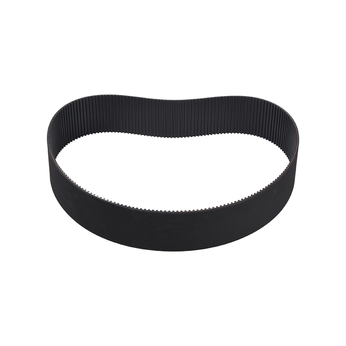
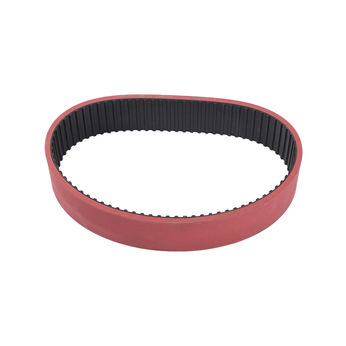
In many continuous production lines, endless synchronous belts (seamless ring belts) are the preferred solution. Unlike open-ended joined belts, endless synchronous belts are molded in a single process. The tension member (usually steel cord or aramid fiber) is complete and continuous.
This structure ensures that the belt does not develop weak points at joints during high-speed cycling, greatly improving tensile strength and service life. When paired with precision-machined synchronous belts and pulleys, they achieve high rotational accuracy and effectively reduce system vibration.
Synchronous Round Belt Applications in Special Conditions
While mainstream transmissions use toothed structures, the synchronous round belt demonstrates unique flexibility in certain light-duty transmissions or situations requiring overload protection. These belts are often used in multi-axis linkages or complex spatial transmission paths. Their excellent flexibility allows them to maintain good fit even on small-diameter pulleys, reducing energy loss.
Technical Points for Reducing Maintenance Costs
To effectively reduce system failure rates when using Synchronous Timing Belts, the following technical details must be strictly observed:
- Pulley Alignment: If the parallelism deviation of synchronous belts and pulleys exceeds the specified range, it leads to severe edge wear or even belt climbing and detachment.
- Tension Control: Excessive tension accelerates bearing wear and belt root cracking, while insufficient tension causes synchronization failure.
- Environmental Protection: Even high-performance continental synchronous belts require specific material grades (such as EPDM or Polyurethane) in extreme temperatures or chemically corrosive environments to prevent aging and peeling.
Long-term Value of Precise Engagement
The core of industrial transmission is stability. By reasonably configuring synchronous belt types, enterprises can address specific needs for high load, high speed, or high precision. Whether it is endless synchronous belts that perform stably under high tension, or synchronous round belt designs for specific mechanical structures, the essence is to achieve lossless power transmission in complex mechanical movements.
Selecting the right Synchronous Belts is not just about replacing a part; it is an optimization of the entire transmission chain. Understanding the physical fit between synchronous belts and pulleys, combined with scientific selection based on actual operating parameters, is the most effective means to ensure high equipment output and reduce unexpected downtime.
Hot Products
-
 View More
-
 View More
V-belt For Industry
-
 View More
T Type Industry Rubber Synchronous Belt
-
 View More
Toothed wedge belt
-
 View More
Thickened timing belt
-
 View More
Open Timing Belt
-
 View More
Automotive V-belt
-
 View More
Rubber Flat Belt
-
 View More
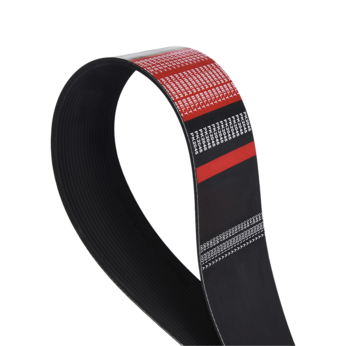
Ribbed Belt
-
 View More
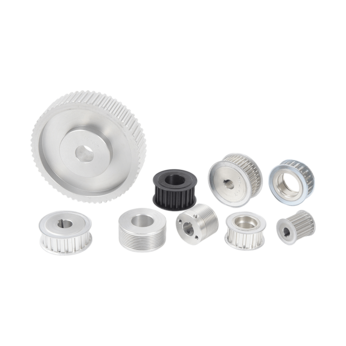
Synchronous Pulley
-
 View More
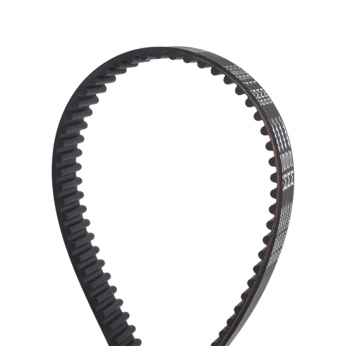
Arc tooth industrial rubber synchronous belt
-
View More
Automotive timing belt

Do you have a question? Feel free to contact!
 Tel: +86-0574-62498188 62497298
 Fax: +86-0574-62497297
 E-mail:
  Add: No. 65, Middle Jinniu Road, Moushan Town, Yuyao City, Zhejiang Province, China
Copyright © Ningbo GUL TZ Rubber Belt Co., Ltd. All rights reserved.

OEM Rubber Driving belts Manufacturers
