
 En
En  English
 简体中文
简体中文
What are the common materials used for industrial timing belt pulleys
The core of an industrial timing belt drive system lies not only in the belt itself but also in its crucial mating component: the timing pulley. The material selection for the pulley directly impacts the transmission system's load capacity, dynamic balance, wear resistance, weight, and ultimately, its operational lifespan. In modern industrial applications, common timing pulley materials primarily include Aluminum Alloys, Cast Iron, Steel, and Engineering Plastics. Each material offers specific technical attributes and application advantages.
I. Aluminum Alloys: Lightweighting and High-Speed Transmission
Aluminum alloys are the most widely used lightweight material for industrial timing pulleys, dominating drive systems that require high rotational speed, low inertia, and precise control. Commonly used grades, such as the and series, achieve excellent mechanical properties through heat treatment.
Superior Dynamic Balancing Performance
The greatest advantage of aluminum alloys is their extremely low density. During high-speed operation, low-mass pulleys significantly reduce the system's rotational inertia. Low inertia allows the system to achieve faster acceleration and deceleration, while also minimizing the torque requirements on the motor. Furthermore, aluminum alloys are easy to machine for precise dynamic balancing, which is critical for eliminating vibrations at high speeds, effectively reducing noise, and extending bearing life.
Surface Treatment for Enhanced Wear Resistance
While aluminum alloys inherently possess lower hardness than steel or cast iron, their surface properties can be vastly improved through various hard anodizing treatments. The resulting layer of aluminum oxide ceramics exhibits extreme hardness and wear resistance, effectively counteracting the minute friction generated by the timing belt's tension members and body during operation. This ensures that the pulley's tooth profile accuracy does not degrade over prolonged use.
Applicable Scenarios
Aluminum alloy pulleys are the material of choice for automation equipment, CNC machinery, robotics, linear modules, and any application with strict requirements for acceleration and deceleration response speed.
II. Cast Iron: High Strength, Damping, and Heavy-Load Capacity
Cast iron, particularly grey cast iron (such as or ) and ductile iron, is the traditional preferred material for heavy-duty industrial transmission pulleys. It is renowned for its high strength and excellent vibration damping properties.
Exceptional Damping and Vibration Absorption
The graphite structure within cast iron imparts its unique damping capability. When subjected to shock loads or high torque fluctuations, cast iron pulleys can effectively absorb and attenuate mechanical vibrations and noise. This characteristic is crucial for heavy-duty applications such as large compressors, pumping equipment, and heavy conveying lines that experience intermittent shock or require smooth operation.
Robust Load-Bearing and Anti-Deformation Capability
Cast iron possesses high compressive strength and hardness, enabling it to withstand significant radial and axial loads, ensuring the pulley does not undergo plastic deformation under long-term high tension. This maintains the precision of the transmission ratio and the correct engagement of the timing belt, forming the foundation for the reliability of heavy industrial equipment.
Applicable Scenarios
Cast iron pulleys are suitable for metallurgy, mining machinery, large hoisting equipment, heavy-duty conveyors, and all scenarios requiring the handling of high torque and low-speed heavy loads.
III. Steel: Ultimate Strength and Confined Space Applications
Steel, typically carbon steel (such as steel or ) or alloy steel, is an indispensable material in specific industrial pulley applications.
Extreme Strength and Fatigue Resistance
Steel's yield strength and tensile strength are significantly higher than those of cast iron and aluminum alloys. In extreme applications where space is limited and a narrow-face pulley must be used to transmit high power, only steel can provide the necessary strength to resist high tension forces. For environments requiring extremely thin pulley wall thicknesses or those subjected to high fatigue loads, steel offers the only viable solution.
Heat Treatment and Surface Hardening
Steel pulleys can undergo heat treatments such as quenching, tempering, or high-frequency induction hardening to further enhance surface hardness and wear resistance, matching the lifespan of the highly durable timing belt materials. Electroplating or black oxide treatments can also be applied to improve corrosion resistance.
Applicable Scenarios
Steel pulleys are commonly used in aerospace, oil drilling equipment, high-stress gear replacements, and any transmission system with strict strength and volume constraints.
IV. Engineering Plastics: Chemical Resistance and Silent Operation Needs
High-performance engineering plastics, such as Polyoxymethylene (POM) or Nylon (PA), are primarily used in fields with specific requirements for environmental cleanliness, chemical resistance, and operational noise.
Excellent Chemical Resistance and Self-Lubrication
Engineering plastic pulleys exhibit excellent chemical inertness when exposed to water, chemical solvents, or specific oils. Furthermore, some engineering plastics possess self-lubricating properties, meaning they can reduce the heat and wear generated by friction with the back of the timing belt.
Lightweighting and Silent Operation
The extremely low density of engineering plastics allows for lightweighting beyond what aluminum alloys can achieve. More importantly, the low elastic modulus of plastic materials allows them to effectively absorb engagement shock, enabling ultra-quiet operation. This is critical in office automation, food packaging, medical equipment, and environments sensitive to noise.
Hot Products
-
 View More
-
 View More
V-belt For Industry
-
 View More
T Type Industry Rubber Synchronous Belt
-
 View More
Toothed wedge belt
-
 View More
Thickened timing belt
-
 View More
Open Timing Belt
-
 View More
Automotive V-belt
-
 View More
Rubber Flat Belt
-
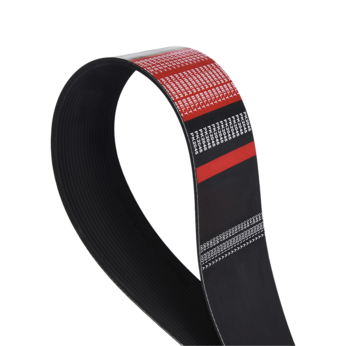 View More
Ribbed Belt
-
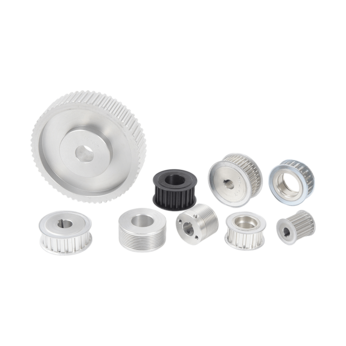 View More
Synchronous Pulley
-
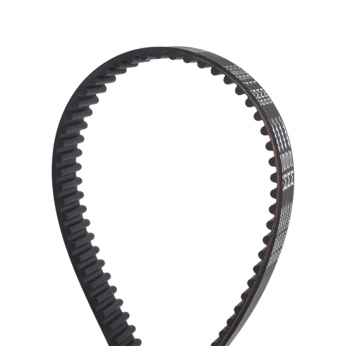 View More
Arc tooth industrial rubber synchronous belt
-
View More
Automotive timing belt

Do you have a question? Feel free to contact!
 Tel: +86-0574-62498188 62497298
 Fax: +86-0574-62497297
 E-mail:
  Add: No. 65, Middle Jinniu Road, Moushan Town, Yuyao City, Zhejiang Province, China
Copyright © Ningbo GUL TZ Rubber Belt Co., Ltd. All rights reserved.

OEM Rubber Driving belts Manufacturers
