
 En
En  English
 简体中文
简体中文
How does a thicker timing belt affect transmission rigidity and positioning accuracy
Timing belts are widely used positive-drive transmission components in automation equipment, CNC machinery, packaging systems, linear modules, and precision conveying applications. As industrial equipment continues to evolve toward higher loads, higher acceleration, and greater positioning accuracy, the mechanical limitations of standard-thickness timing belts have become increasingly apparent.
Thickened timing belts are developed by increasing the structural thickness of the belt body while maintaining the original pitch and tooth profile. This structural enhancement significantly improves mechanical performance, particularly in terms of transmission stiffness and positioning accuracy, making thickened timing belts an important solution for high-performance drive systems.
Definition of Transmission Stiffness in Timing Belt Systems
Transmission stiffness refers to the ability of a mechanical drive system to resist elastic deformation when subjected to load. In timing belt drives, stiffness is primarily influenced by the following factors:
-
Elastic modulus of belt materials
-
Elongation characteristics of tensile cords
-
Effective cross-sectional area of the belt
-
Stability of tooth engagement with the pulley
During operation, timing belts undergo elastic elongation under tensile force. This elongation directly affects system responsiveness, load stability, and motion control accuracy. Thickened timing belts reduce elastic deformation by increasing the effective load-bearing cross-section, thereby enhancing overall stiffness.
Influence of Thickened Timing Belts on Longitudinal Stiffness
Longitudinal stiffness is closely related to the tensile layer within the timing belt. Thickened timing belts typically incorporate larger-diameter or higher-count tensile cords made from steel, aramid, or fiberglass materials. Under identical tension levels, thickened timing belts exhibit significantly lower axial elongation.
In high-torque or long-stroke applications, increased longitudinal stiffness effectively minimizes positional deviation caused by load variation. For servo-driven systems requiring frequent acceleration and deceleration, thickened timing belts provide more stable and consistent force transmission under dynamic operating conditions.
Structural and Lateral Stiffness Improvements
Increasing belt thickness also enhances overall structural rigidity. A thicker belt body results in a higher moment of inertia, improving resistance to lateral deformation during pulley engagement.
More uniform stress distribution at the tooth root
Stable tooth contact under heavy loads
Reduced lateral vibration of the belt body
Improved structural stiffness is especially beneficial in high-speed operations and multi-axis synchronized systems, where belt deformation can otherwise introduce oscillation and motion instability.
Positioning Accuracy in Timing Belt Transmission Systems
Positioning accuracy consists of repeatability and absolute positioning accuracy. In timing belt systems, positioning errors are primarily caused by:
-
Elastic elongation of the belt
-
Tooth engagement clearance
-
Transient deformation under variable loads
-
Material fatigue during long-term operation
In precision motion systems, even minimal belt elongation can be amplified into measurable positioning errors at the driven axis.
Direct Impact of Thickened Timing Belts on Positioning Accuracy
Due to reduced elastic deformation, thickened timing belts significantly decrease load-induced displacement under identical operating conditions.
Lower elongation per unit load
Reduced positional rebound during start-stop motion
Improved consistency of repeated motion cycles
In linear modules, XYZ motion platforms, and automated loading systems, thickened timing belts contribute to higher repeat positioning accuracy and more predictable motion control behavior.
Performance Under Dynamic Operating Conditions
High-acceleration and high-frequency start-stop applications impose substantial inertial forces on timing belts. Thickened timing belts, with their enhanced stiffness, achieve stable tension more rapidly during acceleration and deceleration phases.
This characteristic allows motion systems to maintain trajectory accuracy at higher speeds, while reducing reliance on controller compensation. Thickened timing belts are therefore well suited for automated production lines and high-speed packaging equipment.
Long-Term Stability of Positioning Accuracy
Over extended service life, timing belts experience material fatigue and microstructural changes. Thickened timing belts operate under lower stress levels for the same load, resulting in improved fatigue resistance.
Lower permanent elongation over time
Reduced rate of tooth wear
Slower degradation of positioning accuracy
For industrial applications where maintenance intervals and long-term accuracy retention are critical, thickened timing belts offer clear performance advantages.
Value of Thickened Timing Belts in High-Precision Applications
In precision assembly equipment, inspection systems, and semiconductor auxiliary machinery, transmission stiffness and positioning accuracy directly affect product quality and equipment reliability. Thickened timing belts enhance system performance through structural reinforcement, without requiring changes to the overall drive architecture.
Hot Products
-
 View More
-
 View More
V-belt For Industry
-
 View More
T Type Industry Rubber Synchronous Belt
-
 View More
Toothed wedge belt
-
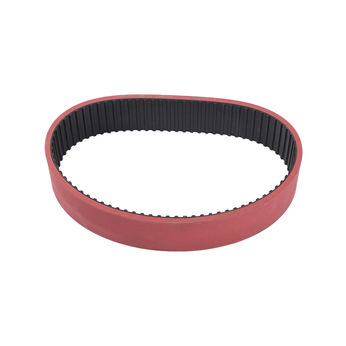 View More
Thickened timing belt
-
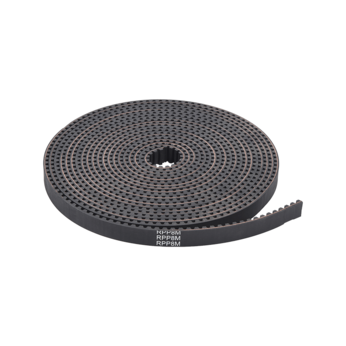 View More
Open Timing Belt
-
 View More
Automotive V-belt
-
 View More
Rubber Flat Belt
-
 View More
Ribbed Belt
-
 View More
Synchronous Pulley
-
 View More
Arc tooth industrial rubber synchronous belt
-
View More
Automotive timing belt

Do you have a question? Feel free to contact!
 Tel: +86-0574-62498188 62497298
 Fax: +86-0574-62497297
 E-mail:
  Add: No. 65, Middle Jinniu Road, Moushan Town, Yuyao City, Zhejiang Province, China
Copyright © Ningbo GUL TZ Rubber Belt Co., Ltd. All rights reserved.

OEM Rubber Driving belts Manufacturers
