
 En
 English
 简体中文

Timing belt vs timing chain, which is better: Practical Applications, Selection
Timing Belt vs Timing Chain: The Short Answer
Neither a timing belt nor a timing chain is better on its own. The drive that wins is the one whose weakest point sits outside your normal operating envelope. A belt loses the argument when it is asked to survive heat, oil mist and shock loading at the same time. A chain loses the argument when it is asked to run at 4,000 rpm across a 600 mm span with no lubrication and a noise limit.
The rule we give to design engineers is short: choose a belt when speed, quietness, cleanliness or positioning accuracy dominate the decision. Choose a chain when torque density, shock resistance and an existing oil circuit dominate it. Cost, service life and maintenance intervals follow from those variables instead of leading them.
One-line verdict
Below roughly 500 rpm with heavy shock, reversing loads or a hot oily housing, a chain is usually the safer engineering call. Above 1,000 rpm, or in any dry-running application, a belt is usually the better one.
Speed and noise
Belt wins. Continuous tooth engagement spreads load over six to twelve teeth, so a belt drive typically runs 5-8 dB(A) quieter and tolerates two to three times the linear speed of a comparable chain.
Torque and shock
Chain wins. Steel links absorb impact peaks that would crack a belt tooth root. Presses, crushers and reversing drives sit firmly in chain territory.
Scheduled maintenance
Mixed. A chain has no fixed replacement interval but needs clean oil for its whole life. A belt needs replacement at a defined interval and needs no lubrication circuit at all.
Environment
Belt wins in clean, dry, washdown or food-contact areas where oil mist is forbidden. Chain wins in hot, abrasive or already oil-soaked housings.
What Both Systems Actually Do
Both are synchronous drives. In an engine they lock the crankshaft and camshaft at a fixed 2:1 ratio on a four-stroke, so valve events repeat exactly once per two crank revolutions. In an industrial machine they lock a motor shaft to a load shaft with zero cumulative slip, which is why they appear on indexing conveyors, printing units and machine tool spindles.
The consequence of losing that lock is not a gradual loss of performance. On an interference engine, a belt that jumps three teeth can put a piston into a valve head in under a second. On an indexing conveyor, a slipped belt throws every downstream position out by the amount of the slip, every cycle, until someone notices the scrap.
Belt: form fit through teeth
A toothed belt carries load through the flanks of moulded teeth seated in matching pulley grooves. There is no metal-to-metal contact in the power path, no oil film to maintain, and no wear debris circulating in a lubricant. Efficiency typically lands between 97% and 99% at rated load, and stays close to that figure across a wide speed range.
Chain: rolling contact through pins
A chain carries load through steel pins articulating inside bushings or rollers. Each link joint rotates as it enters and leaves the sprocket, so every revolution generates a small amount of sliding wear that the oil film has to manage. A well-lubricated chain reaches 96-98% efficiency, but that figure falls quickly once oil quality drops or the chain rides high on a worn sprocket.
How a Timing Belt Is Built, and Why the Tooth Profile Matters
A timing belt is four functional layers working together. The tension member, usually glass fibre or aramid cord wound helically, carries nearly all the load and sets the elongation limit. The rubber compound, neoprene for general duty or HNBR where heat and oil are present, transfers load from cord to tooth. The nylon facing fabric on the tooth surface controls friction and wear against the pulley. The backing protects the cord from abrasion and contamination.
When a belt fails early, the cause is usually a mismatch between one of those layers and the application: a general-duty compound in a 110 °C engine bay, a glass cord in a drive that needs high shock capacity, or a facing fabric worn through by a rough pulley groove.
Tooth profile sets the torque ceiling
Profile choice matters more than most buyers expect, because a profile that is wrong for the duty will ratchet long before the belt reaches its rated life.
- Trapezoidal T-type profiles (MXL, XL, L, H, XH) are the general industrial standard. Simple grooves, wide availability, good for low to medium power at moderate speed.
- Arc tooth profiles such as HTD and similar curvilinear forms carry more torque per millimetre of width, mesh more smoothly and tolerate smaller pulley diameters without tooth root stress rising out of control.
- High-precision curvilinear profiles with modified flank geometry reduce backlash and are the usual choice for positioning axes, machine tools and printing registration.
A trapezoidal belt forced onto a small pulley at high torque is one of the most common field failures we see: the tooth root cracks from the flank, the belt jumps, and the machine loses position. Moving to an arc tooth profile at the same width usually solves it without changing the housing.
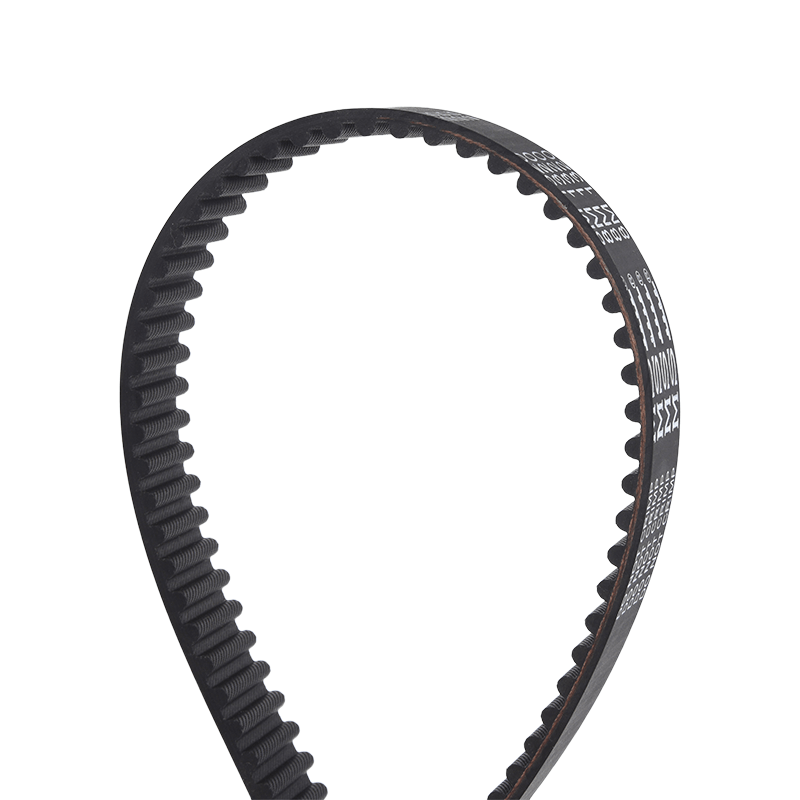 Arc Tooth Industrial Timing BeltsArc tooth synchronous belts are shown for low-noise, precise industrial drives, with maintenance and troubleshooting guidance for common belt faults.View Product →
Dimension and tolerance discipline is what separates a belt that lasts from one that runs hot. Our engineering team has taken part in drafting the national and industry standards that govern synchronous belt dimensions, which is a useful thing to ask any supplier about when you are comparing quotes on paper only.
How a Timing Chain Is Built, and Why It Wears Out
A chain is a series of steel plates connected by pins, with rollers or bushings at each joint. It runs on hardened sprockets, is guided by plastic or steel rails, and is kept under tension by a hydraulic or spring tensioner. In an engine it lives inside the crankcase and is fed oil from the same circuit that lubricates the bearings.
The term "chain stretch" is misleading. Steel does not stretch appreciably in service. What grows is clearance: pins wear, bushings wear, rollers flatten, and each of those small clearances adds up along the length of the chain. One percent elongation across a one-metre chain equals ten millimetres of extra slack that the tensioner has to take up. Once the tensioner reaches the end of its travel, cam timing retards, the idle goes rough and a cam-crank correlation code usually appears.
Chain life is therefore an oil-quality story more than a design story. A chain fed clean oil at the right interval commonly reaches 150,000-300,000 km. The same chain with extended oil changes and a clogged oil feed can fail its guides before 100,000 km, and the guide failure is what destroys the engine, not the chain itself.
Head-to-Head: Timing Belt vs Timing Chain Comparison
The table below collects the differences that actually change a purchasing or design decision, rather than the ones that only matter in a brochure. Figures are typical ranges for industrial and automotive synchronous drives; exact values move with size, compound, tension and duty cycle.
| Attribute | Timing belt | Timing chain |
|---|---|---|
| Power transmission | Tooth form fit, no slip by design | Roller and pin engagement, no slip while tensioned |
| Lubrication | None required | Oil bath or oil mist essential |
| Noise at matched speed | Typically 5-8 dB(A) lower | Higher, and rises as joints wear |
| Mass of the drive | Roughly one third to one half of a chain of equal capacity | Heavier; adds inertia to the system |
| Efficiency at rated load | 97-99% | 96-98% when new and well lubricated |
| Practical linear speed | Up to 40-80 m/s depending on profile and width | Around 25-30 m/s in practice |
| Ambient temperature | -30 to +100 °C for standard compounds, up to about 130 °C for HNBR grades | 150 °C and above when oil-lubricated |
| Shock and reversing loads | Limited; tooth root is the weak point | Good; steel joints absorb peaks |
| Small pulley capability | Needs minimum tooth count per profile | Handles very small sprockets better |
| Contamination tolerance | Poor with oil and abrasives on many compounds | Good in dirty, oily housings |
| Typical service interval | 60,000-100,000 km automotive; 2-5 years industrial | 150,000-300,000 km automotive; inspection-based industrial |
| Dominant failure mode | Tooth shear, cord fatigue, backing cracking | Elongation, guide and tensioner wear |
| Replacement cost per event | Lower part cost, shorter labour | Higher part cost, longer labour, longer interval |
Where Timing Belts Win
Belts win on the drives that punish metal-to-metal contact: high speed, long centre distances, dry running and anything that has to hold position without backlash.
High shaft speed and long spans
A belt is thin, light and internally damped, so it does not build the same centrifugal and polygon-effect loads that a chain does. On a 3,000 rpm input with a 500 mm centre distance, a belt drive runs calmly while an equivalent chain starts to whip and load its guides.
Dry, clean or washdown running
Every chain needs a lubricant film. Food packaging, textile finishing, paper converting and medical device assembly often forbid oil near the product. A belt needs nothing but the correct tension, which removes an entire maintenance route from the plant.
Positioning accuracy
Modified curvilinear profiles with controlled backlash give repeatable position to within a fraction of a degree, cycle after cycle, without the cumulative take-up that a worn chain introduces. On a Cartesian robot or a print registration unit, that difference shows up directly in scrap rate.
Noise and vibration
Rubber and elastomer compounds damp the impact that occurs each time a chain roller lands on a sprocket tooth. On residential HVAC, office equipment and medical scanners, that difference is often the reason a belt is specified at all.
Efficiency retention: belt vs chain over time
Belt, new
98%
Chain, new and oiled
97%
Belt after 10,000 h
96%
Chain after 10,000 h, poor oil
92%
Bars show typical transmission efficiency at rated load; chain losses accelerate once lubrication degrades.
Where Timing Chains Win
Chains win wherever the load is ugly. If a drive sees shock, stall, reversal or a housing temperature that would cook a rubber compound, the steel joint is the safer element.
Shock and reversing duty
A 15 kW briquetting press that stalls twice a shift puts a torque spike through the drive that no belt tooth root enjoys. A chain absorbs it through elastic articulation and distributes it across several links at once.
Heat and enclosed housings
Inside an engine crankcase at 120-150 °C with oil spray everywhere, a chain is in its natural environment. A belt in the same space needs an HNBR compound and still expects a defined replacement interval.
Very small sprockets and tight envelopes
Where the packaging leaves no room for a pulley with 20 or more teeth, a chain can be run on a much smaller sprocket without the belt-style penalty of reduced tooth engagement and higher root stress.
The catch is that every one of those advantages depends on oil reaching the pins. A chain that runs dry, or with sludge blocking an oil feed, converts its durability advantage into a failure mode within a few thousand hours.
The Automotive Case: Interference Engines Change the Maths
On a non-interference engine, a broken timing belt costs a tow truck and a replacement belt. On an interference engine, the same failure costs valves, sometimes a head, and occasionally a piston. That single design fact outweighs most of the comfort arguments in the belt-versus-chain debate.
Belt-equipped engines are typically specified with a replacement window of 60,000-100,000 miles or five to seven years, whichever comes first. Age matters as much as mileage, because ozone, heat cycling and oil seepage degrade the compound even when the car sits. A ten-year-old belt with 40,000 miles on it is not a low-risk item.
Chain-equipped engines are often described as maintenance-free for life, which is true only in the sense that the chain itself rarely breaks first. Guides, tensioners and the chain's own elongation are what fail, and the labour to reach them is usually higher than a belt job because the timing cover sits behind more components.
Two practical rules carry over to industrial drives as well. First, replace the water pump, idlers and tensioner with the belt when they share the same labour window; the extra part cost is small against a second teardown. Second, never judge a belt by its outside appearance alone. Cracks at the tooth root and hardening of the backing appear long before the teeth strip.
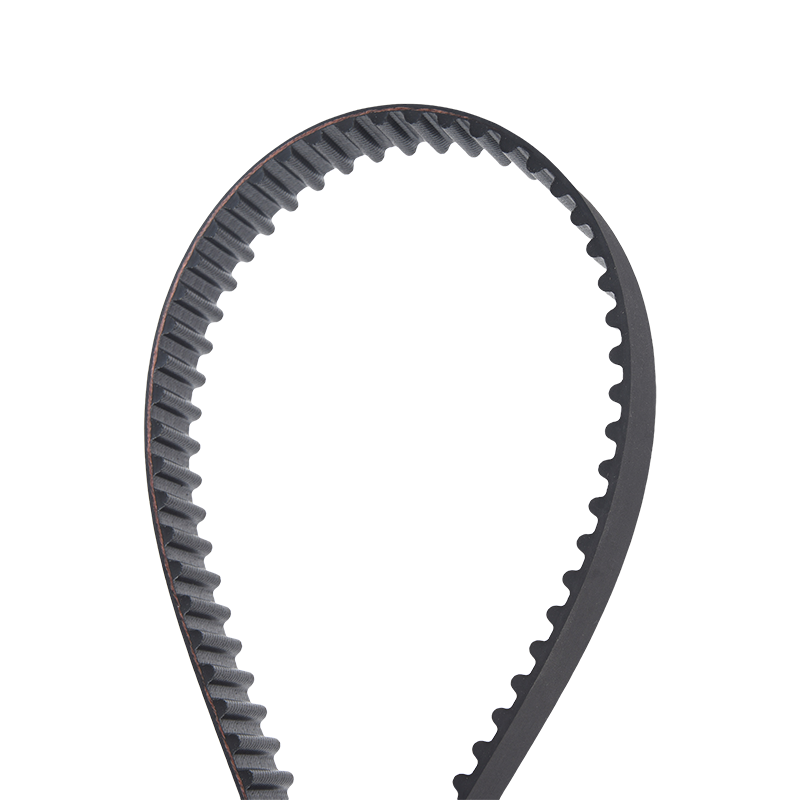 Automotive Timing Belt for Engine Cam DrivesAutomotive timing belt models are listed with pitch and profile data for cam drives; heat and oil resistance suit engine-room conditions.View Product →
The Industrial Case: Duty Cycle Beats Reputation
In plant equipment, the question is rarely "which is better" and almost always "which one fails in a way we can plan for". A belt announces itself through dust, cracking and a defined interval. A chain announces itself through noise and oil debris, both of which are easy to ignore until the guide lets go.
Take a 24/7 packaging line running a 1,750 rpm motor through a 2:1 reduction to an indexing head. The belt handles the speed, holds registration and needs no oil near the film. The plant carries one spare and changes it on a planned Sunday. That is a belt application by every measure.
Now take a 15 kW scrap handling conveyor running at 120 rpm with frequent jam reversals. A belt would need a heavy service factor and would still give up its tooth roots early. A chain, fed from a drip oiler and inspected monthly, will run for years. That is a chain application.
The engineering analysis behind the two outcomes is not complicated, but it does require the real duty cycle rather than the nominal motor rating. Load peaks, start frequency and ambient temperature move the answer more than the nameplate power does. A fuller treatment of the load-path comparison is available in this analysis of belt and chain drives, which walks through the same variables from a machine design angle.
Six Numbers That Decide the Answer
Before choosing, collect six figures. With them, the choice is usually obvious; without them, any recommendation is a guess dressed as advice.
- Speed at the small pulley, in both rpm and metres per second. Above roughly 30 m/s the chain option narrows sharply; above 1,000 rpm the belt option improves.
- Torque and service factor. Take the peak torque, not the average. A service factor of 1.5-2.0 on shock-loaded equipment is normal for belt selection.
- Ratio and centre distance. Larger ratios mean more wrap on the small pulley, which matters more for belts than for chains.
- Pulley or sprocket diameter limits. Each belt profile has a minimum tooth count for a reason; going below it shortens life dramatically.
- Ambient temperature and contamination. Above 100 °C, standard neoprene is out. Oil spray, abrasive dust or washdown chemicals each rule out specific compounds.
- Annual hours and acceptable downtime. A machine running 6,000 hours a year justifies a more expensive belt grade; a machine running 800 hours may not.
Add one soft number that engineers often skip: whether maintenance staff can actually reach the drive. A belt that is easy to inspect and re-tension is a better long-term choice than a chain tucked behind a guard with a lubrication point nobody services.
Installation and Tensioning: Where Most Failures Begin
The majority of premature belt failures we investigate are not material failures. They are alignment, tension or pulley wear problems introduced at installation.
- Shaft parallelism should be within about 0.1 mm per 100 mm of centre distance, and angular misalignment below 0.5 degrees. A straight edge across both pulley faces is enough to check it.
- Tension by deflection, not by feel. Apply the specified force at the midpoint of the span and measure deflection against the drive manufacturer's figure, usually expressed as a fraction of span length.
- Never lever a belt over a pulley flange. Rolling it on damages the cord, and the damage appears as a failure months later.
- Put idlers on the slack side and keep the pulley diameter at least 1.5 times the smallest drive pulley to avoid reverse bending.
- Check pulley grooves for wear. A worn groove lets the belt tooth bottom out, which removes the clearance the design relies on and causes rapid root cracking.
- Store belts in the dark, away from heat and ozone sources, and never fold or hang them on a nail.
The pulley side deserves the same attention as the belt, because the two are a matched pair. Groove wear, runout and bore fit all change the load distribution across the teeth.
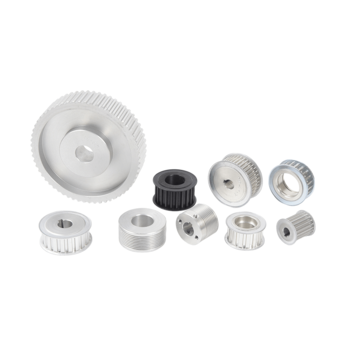
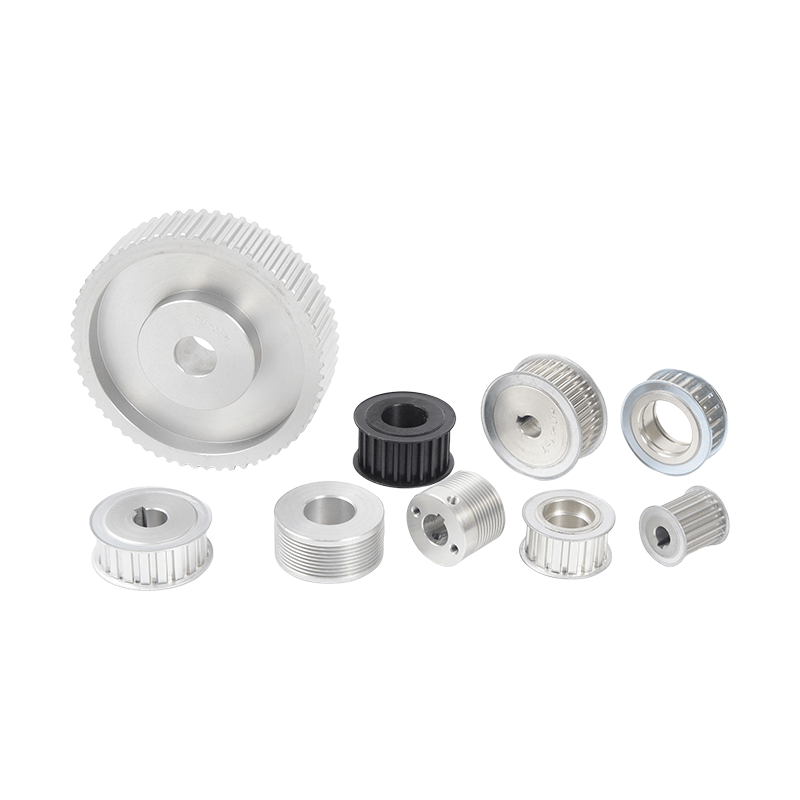 Synchronous Pulley for Matched Belt DrivesSynchronous pulleys are shown in arc-tooth, linear and T-type tables with material options, for accurate, low-noise multi-axis transmission.View Product →
For chain drives the equivalent list is shorter but no less important: correct tensioner travel remaining, guide wear within limits, and oil that actually reaches the pins rather than merely existing in the sump.
Failure Symptoms: What Each System Tells You
Diagnosis is easier when you know what the other system would never do. A belt rarely produces metallic debris; a chain rarely produces fine black dust on the housing wall.
| Symptom | Likely on a belt drive | Likely on a chain drive |
|---|---|---|
| Cold-start rattle that fades after 30 seconds | Uncommon; belt noise usually persists when warm | Tensioner or guide wear; check the oil drain plug for debris |
| Rhythmic squeal at idle | Misalignment, glazed backing or low tension | Worn sprocket teeth or a dry guide rail |
| Retarded timing and poor idle | Tooth jump after a stripped or cracked tooth | Elongation past the tensioner's remaining travel |
| Fine black dust in the housing | Normal in small amounts; heavy build-up means misalignment | Not typical of a healthy chain drive |
| Metallic particles in the lubricant | Not belt related | Pin, roller or guide wear |
| Oil-soaked belt | Seal leak; replace the seal and the belt together | Not applicable |
| Whine that rises with speed | Tension too high or a worn idler bearing | Chain too tight or a misaligned sprocket |
Total Cost of Ownership, Not Part Price
Comparing a belt and a chain on part price alone produces the wrong answer almost every time. The relevant figure is cost per 10,000 operating hours, and it includes labour, downtime, lubrication and the risk cost of an unplanned stop.
- Belt: lower part cost, shorter labour, a defined interval, no lubrication hardware, but a hard failure if the interval is missed on an interference drive.
- Chain: higher part cost, longer labour at replacement, but a longer interval and no scheduled replacement in many well-maintained applications.
- Lubrication: a chain needs an oil circuit, oil changes attributable to the drive, and inspection labour. A belt needs none of that.
- Downtime: a belt failure is sudden but predictable and cheap to plan. A chain guide failure can destroy a housing or a head, which is the expensive scenario nobody budgets for.
- Energy: at 1-2 percentage points of efficiency difference on a 30 kW drive running 6,000 hours, the annual electricity difference is measurable and usually favours the belt.
The pattern is consistent: belts cost less to buy and to replace, chains cost less per hour only when the lubrication regime is genuinely maintained.
Frequently Asked Questions
Is a timing belt or a timing chain more reliable?
Both are reliable when specified and maintained correctly. A chain is more tolerant of overload and heat; a belt is more predictable because its life is defined by an interval rather than by oil quality. The unreliable option is a chain with neglected oil or a belt run past its replacement date.
Do timing chains need to be replaced?
Usually not at a fixed mileage, but they do wear. Guides, tensioners and elongation all have limits, and inspection is the only way to know where a specific drive stands. On high-hour industrial drives, a chain that has consumed most of its tensioner travel is due regardless of hours.
How often should a timing belt be replaced?
For automotive use, follow the manufacturer's interval, typically 60,000-100,000 miles or five to seven years, whichever comes first. For industrial drives, two to five years is a common planning window, shortened by heat, oil exposure, frequent starts or continuous running above 3,000 rpm.
Can a belt drive and a chain drive be swapped on the same machine?
Rarely without redesign. The two need different centre distances, different shaft loads and different guards. A chain conversion usually requires a lubrication path and higher pre-tension; a belt conversion requires checking that the pulley diameters allowed by the profile still fit the envelope.
Which one is quieter?
The belt, consistently. Elastomer teeth engage progressively and damp impact, while chain rollers land on sprocket teeth with a discrete impact at every pitch. The gap widens as the chain wears and the sprocket profile changes.
Which handles higher temperature?
The chain, when it is oil-lubricated. Standard neoprene belts are comfortable to about 100 °C and HNBR grades to roughly 130 °C. Beyond that, steel is the only sensible option unless the drive can be moved outside the hot zone.
What usually causes a timing belt to fail early?
Tension and alignment problems come first, followed by contamination and pulley wear. Tooth root cracking from running below the minimum pulley diameter is the third common cause. Genuine material failure is rare in a correctly specified drive.
Does a belt or a chain need less maintenance?
A belt needs almost no attention between replacements but must be replaced on schedule. A chain needs no scheduled replacement but needs oil, inspection and eventual guide or tensioner work. Neither is maintenance-free, and treating either as such is what shortens life.
Hot Products
-
 View More
-
 View More
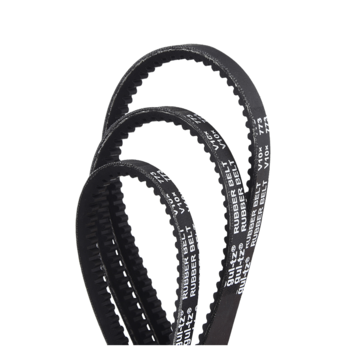
V-belt For Industry
-
 View More
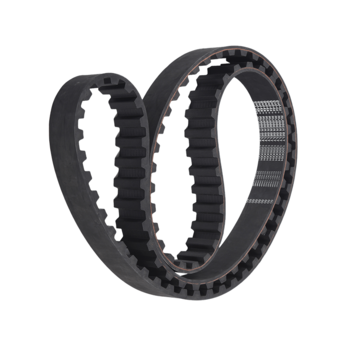
T Type Industry Rubber Synchronous Belt
-
 View More
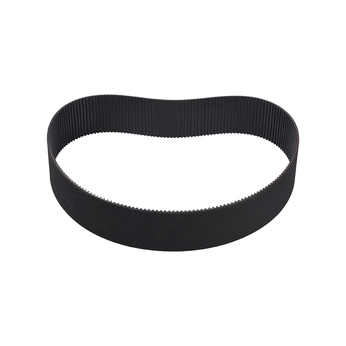
Toothed wedge belt
-
 View More
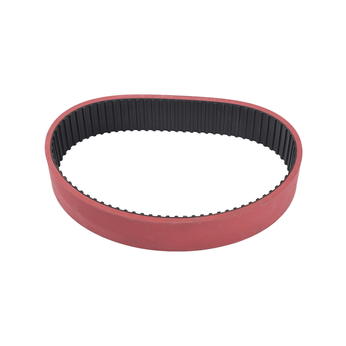
Thickened timing belt
-
 View More
Open Timing Belt
-
 View More
Automotive V-belt
-
 View More
Rubber Flat Belt
-
 View More
Ribbed Belt
-
 View More
Synchronous Pulley
-
 View More
Arc tooth industrial rubber synchronous belt
-
View More
Automotive timing belt

Do you have a question? Feel free to contact!
 Tel: +86-0574-62498188 62497298
 Fax: +86-0574-62497297
 E-mail:
 Add: No. 65, Middle Jinniu Road, Moushan Town, Yuyao City, Zhejiang Province, China
Copyright © Ningbo GUL TZ Rubber Belt Co., Ltd. All rights reserved.

OEM Rubber Driving belts Manufacturers
