
 En
En  English
 简体中文
简体中文
How Do Flat Belts and Flat Belt Conveyors Work
Flat Belt Technical Guide
What Is a Flat Belt and How Does a Flat Belt Conveyor Work?
A flat belt is a flexible transmission or conveying component with a broad, flat running surface. It can transfer rotary power between pulleys, move products through production equipment, or provide controlled motion in compact machinery. Its simple cross-section supports smooth operation, low vibration, efficient high-speed movement, and flexible installation over long center distances.
Industrial users searching for a reliable flat belt should evaluate the belt material, thickness, width, joint structure, pulley diameter, operating speed, load, temperature, and required surface friction. These factors directly affect tracking accuracy, service life, transmission efficiency, and conveyor stability.
Information Required for Belt Selection
Belt width Required running width
Belt length Endless length or open length
Pulley diameter Minimum and drive pulley size
Application Transmission or conveying
Environment Temperature, oil, dust, moisture
01
Power Transmission
Flat belts transfer torque from a motor-driven pulley to a driven pulley through friction between the belt surface and pulley face.
02
Product Conveying
Flat belt conveyors provide a continuous carrying surface for cartons, components, sheets, packages, containers, and lightweight industrial products.
03
Precision Motion
Thin flat belts are used in printers, measuring equipment, compact drives, office machines, textile systems, and positioning mechanisms.
Technical Definition
What Is a Flat Belt?
What is a flat belt? It is a belt with a rectangular cross-section and a relatively large contact surface. Unlike belts that operate inside shaped grooves, a flat belt normally runs across a smooth or slightly crowned pulley face. Power is transmitted by friction, while conveyor versions carry products directly on the belt surface.
Flat belt construction may include polyester fabric, nylon sheet, rubber, polyurethane, cotton fabric, polyamide film, friction coatings, or laminated composite layers. Each construction provides a different balance of flexibility, tensile strength, dimensional stability, wear resistance, grip, and resistance to environmental conditions.
Typical Flat Belt Characteristics
- Broad and continuous running surface
- Low vibration during high-speed operation
- Good flexibility around suitable pulley diameters
- Available with smooth, rough, coated, or patterned surfaces
- Suitable for open drives, compact drives, and conveyor systems
- Available as endless, finger-spliced, skived, bonded, or mechanically joined belts
Application Purpose
What Is the Primary Purpose of Flat Belts?
What is the primary purpose of flat belts? The primary purpose depends on the machine design. A transmission flat belt delivers rotational power between shafts. A conveyor flat belt supports and moves products between processing positions. A precision flat belt controls movement in equipment requiring stable speed and low vibration.
Automation Equipment
Used for transferring parts between assembly, inspection, sorting, labeling, and packaging stations.
Packaging Machinery
Provides controlled movement for cartons, pouches, bottles, trays, labels, and wrapped products.
Printing and Paper Processing
Supports accurate feeding, pulling, positioning, and transport of paper, film, labels, and printed sheets.
Textile Machinery
Suitable for lightweight transmission and continuous movement where smooth running is important.
Electronic Production
Used to convey small components, circuit assemblies, housings, and finished electronic products.
Precision Devices
Thin belts support low-noise motion in scanners, office equipment, test instruments, and compact mechanisms.
Conveyor Construction
How Do Flat Belt Conveyors Move Products?
Flat belt conveyors use a motor, drive pulley, tail pulley, supporting bed, tensioning mechanism, and continuous belt loop. The motor rotates the drive pulley. Friction between the pulley surface and belt creates belt movement. The product remains on the upper carrying surface while the lower belt section returns beneath the conveyor.
Step 1
Drive Input
A motor and gearbox provide the required speed and torque to the drive pulley.
Step 2
Belt Traction
Pulley contact and correct tension create sufficient traction to move the belt without excessive slip.
Step 3
Load Transport
The upper belt surface carries products across a slider bed or supporting rollers.
Step 4
Belt Return
The belt travels around the tail pulley and returns to the drive section for continuous operation.
Flat belt conveyor design note: Excessive tension can increase bearing load, belt elongation, splice stress, and energy consumption. Insufficient tension can cause slipping, unstable speed, poor tracking, and reduced conveying capacity.
Selection Reference
Important Parameters for a Flat Belt Conveyor
| Parameter | Common Reference Range | Why It Matters |
| Belt width | 20mm to 2000mm | Determines product support area and practical conveying capacity. |
| Belt thickness | 0.5mm to 10mm | Affects flexibility, strength, pulley compatibility, and belt weight. |
| Conveyor speed | 0.1m/s to 5m/s | Must match production rate, product stability, and transfer accuracy. |
| Pulley diameter | 20mm to 300mm | Must meet the minimum bending requirement of the selected belt. |
| Operating temperature | -30°C to 120°C | Actual limits depend on belt material, coating, joint, and exposure time. |
| Surface profile | Smooth, rough, grip, patterned | Controls friction, release performance, product stability, and cleaning. |
| Tensioning method | Screw, spring, gravity, pneumatic | Maintains suitable belt tension as load and belt length change. |
| Joint type | Endless, finger splice, skived, mechanical | Influences flexibility, vibration, installation method, and joint strength. |
The values above are general references rather than fixed limits. Final specifications should be determined from the belt construction, product load, pulley arrangement, speed, duty cycle, and operating environment.
Transmission Principle
A Flat Belt Connects Pulley A to Pulley B: What Happens?
The statement “a flat belt connects pulley A to pulley B” describes a basic friction-drive system. Pulley A is usually the driving pulley connected to a motor or input shaft. Pulley B is the driven pulley connected to the machine shaft. Rotation of pulley A moves the belt, and the moving belt rotates pulley B.
In an open belt drive, pulley A and pulley B rotate in the same direction. In a crossed belt drive, they rotate in opposite directions. Crossed arrangements increase belt twisting and edge contact, so they require careful evaluation when belt width, speed, and service life are important.
Approximate Speed Relationship
NA × DA ≈ NB × DB
N represents pulley speed. D represents pulley diameter. Actual output speed can vary because of belt stretch, elastic creep, load changes, and surface slip.
Calculation Example
When pulley A has a diameter of 100mm and rotates at 1200 revolutions per minute, while pulley B has a diameter of 200mm, the theoretical speed of pulley B is approximately 600 revolutions per minute.
Pulley Engineering
How to Make a Flat Belt Pulley
How to make a flat belt pulley depends on shaft size, transmitted power, pulley speed, belt width, available installation space, and manufacturing method. Flat belt pulleys may be produced from steel, aluminum alloy, cast iron, or suitable engineering plastics.
1
Define Dimensions
Determine pulley diameter, face width, bore diameter, hub length, keyway, and shaft connection.
2
Select Material
Choose material according to speed, torque, equipment weight, corrosion exposure, and machining requirements.
3
Machine the Pulley
Turn the outside diameter, pulley face, hub, bore, and end surfaces with controlled concentricity.
4
Prepare the Surface
Remove burrs and sharp edges. Maintain a consistent surface suitable for stable belt friction.
5
Check Balance
Evaluate static or dynamic balance when the pulley operates at elevated rotational speed.
6
Align the Drive
Install both pulleys with parallel shafts and correctly aligned pulley faces.
Crowned Pulley Face
A slight crown can help a flat belt remain near the pulley center. Excessive crowning can concentrate pressure in the belt center and accelerate fatigue.
Pulley Face Width
The pulley face should normally be wider than the belt so the belt has adequate operating clearance.
Surface Condition
Rust, oil, sharp machining marks, weld residue, and edge damage can reduce traction or damage the belt.
Belt Production
How to Make a Flat Drive Belt
How to make a flat drive belt requires more than cutting a strip of rubber or fabric. A dependable flat drive belt needs a stable tensile layer, accurately controlled thickness, straight edges, a suitable friction surface, and a joint capable of repeated bending.
Material selection Select rubber, polyurethane, polyamide, polyester fabric, or composite construction according to load and environment.
Dimension control Confirm belt width, thickness, endless length, length tolerance, and minimum pulley diameter.
Precision cutting Cut the belt in a straight line to prevent uneven edge tension and tracking problems.
Joint preparation Prepare the ends for finger splicing, skiving, bonding, thermal joining, or mechanical fastening.
Joint finishing Control joint thickness and remove raised edges that could create vibration during pulley contact.
Running inspection Test the belt at low speed before applying full production load.
Why Joint Accuracy Matters
A joint that is not perpendicular to the belt centerline can create repeated lateral movement during every revolution. An excessively thick joint can generate impact, noise, vibration, and unstable product movement.
Narrow Precision Belt
Where Is a Flat Capstan Belt 4mm Width Used?
A flat capstan belt 4mm width is a narrow flat belt designed for compact, lightweight, and precision drive systems. It may be used in small office equipment, printing mechanisms, scanners, recording devices, measuring instruments, compact transport modules, and low-load rotary systems.
Width 4mm
Important dimension Endless circumference
Critical factor Pulley alignment
Operating concern Correct tension
Width alone does not determine compatibility. A flat capstan belt 4mm width must also match the required circumference, thickness, elasticity, friction level, joint construction, and minimum pulley diameter. Narrow belts are sensitive to pulley misalignment, sharp pulley edges, uneven tension, and incorrect installation.
Belt Restoration
How to Make a Belt Flat?
How to make a belt flat depends on whether the belt has temporary curl, storage deformation, edge waving, chemical swelling, heat damage, or internal layer separation. Light curling caused by storage may sometimes be reduced by placing the belt on a clean, flat surface under evenly distributed pressure.
Temporary Storage Curl
Store the belt flat or on a sufficiently large roll. Apply even pressure without folding or sharply bending the belt.
Thermoplastic Deformation
Controlled low-temperature conditioning may be possible, but only within the temperature limit of the specific belt material.
Permanent Structural Damage
Replace belts showing delamination, deep cracks, severe edge waves, permanent elongation, or damaged tensile layers.
Common Causes of a Belt No Longer Lying Flat
Storage roll diameter is too small One belt edge remains under pressure Operating temperature is too high Oil or chemicals have caused swelling Pulley diameter is below the belt limit The splice has uneven thickness Left and right tension are unbalanced The internal tensile layer is damaged
Drive Comparison
What Is the Difference Between a Flat Belt and a V-Belt?
What is the difference between a flat belt and a V-belt? The main differences are cross-sectional shape, pulley design, friction mechanism, tracking behavior, suitable center distance, and power density.
| Comparison Item | Flat Belt | V-Belt |
| Cross-section | Flat rectangular profile | Trapezoidal profile |
| Pulley type | Flat or slightly crowned pulley face | Grooved pulley |
| Traction principle | Friction across the pulley face | Friction enhanced by wedge action |
| Center distance | Well suited to longer center distances | Common in compact drive arrangements |
| High-speed operation | Suitable when correctly designed and balanced | Suitable for many general industrial speeds |
| Tracking requirement | Requires accurate pulley alignment | Pulley grooves provide lateral guidance |
| Power per belt width | Depends strongly on belt width and tension | Generally higher because of wedge action |
| Continuous carrying surface | Suitable for direct product conveying | Not normally used as a carrying surface |
| Typical applications | Conveyors, precision machines, high-speed drives | Pumps, fans, compressors, general machinery |
Operational Diagnosis
Why Does a Flat Belt Conveyor Track to One Side?
A flat belt conveyor may move toward one side when the pulleys are not parallel, the conveyor frame is not level, tension differs across the belt width, the splice is angled, material is loaded off-center, or contamination changes friction on one pulley section.
Mechanical Causes
- Drive and tail pulley shafts are not parallel
- Pulley faces are not positioned on the same centerline
- Supporting rollers are angled or damaged
- The conveyor frame is twisted or uneven
- The belt splice is not square
Operating Causes
- Products are repeatedly loaded on one side
- Oil, dust, adhesive, or product residue is present
- Belt tension is too low or uneven
- The belt edge has stretched or become damaged
- The product load exceeds the designed condition
Adjustment method: Make small corrections rather than large pulley movements. Run the belt for several complete revolutions after each adjustment so the tracking response can be observed accurately.
Material Selection
How to Select the Right Flat Belt Material
Polyurethane Surface
Suitable when clean operation, wear resistance, consistent friction, and controlled product contact are required.
Common use: packaging, electronics, precision conveying
Rubber Surface
Provides grip, vibration absorption, and dependable traction for many transmission and conveying applications.
Common use: drive systems, general machinery, product transport
Polyamide Core
Offers dimensional stability, tensile strength, and suitability for compact, high-speed transmission systems.
Common use: machine tools, paper processing, precision drives
Fabric Construction
Provides flexibility and can be produced with different coatings for friction, release, and wear requirements.
Common use: light conveying, textile equipment, transfer systems
Custom Flat Belt Manufacturing
What Information Helps Produce a Correct Replacement Belt?
Accurate application information reduces dimensional errors and makes it easier to select a suitable belt structure. Existing belt markings can help, but measured dimensions and operating conditions provide a more reliable basis for production.
Required dimensions
Belt width, thickness, endless circumference, and acceptable tolerances.
Machine details
Drive pulley diameter, tail pulley diameter, center distance, and pulley face width.
Operating conditions
Running speed, transmitted power, product load, working hours, and start-stop frequency.
Environmental exposure
Temperature, moisture, oil, dust, chemicals, abrasion, and cleaning requirements.
Surface requirements
Smooth release, high grip, low friction, wear resistance, or a specific surface pattern.
Installation requirements
Endless construction, on-site joining, mechanical fastening, or restricted installation space.
Frequently Asked Questions
Flat Belt Questions from Equipment Users
Can a flat belt operate on a completely cylindrical pulley?
It can, but accurate shaft alignment and stable tension become especially important. A properly designed slight crown is often used to improve belt centering.
Why does a flat belt slip during startup?
Possible causes include insufficient initial tension, low pulley wrap angle, oil contamination, excessive startup torque, a worn belt surface, or an undersized drive pulley.
Should flat belt tension be as high as possible?
No. Excessive tension can overload bearings, stretch the belt, increase splice stress, and reduce service life. Tension should be sufficient to prevent slip under the intended load.
Can one flat belt be used for both conveying and power transmission?
Some constructions can perform both functions, but the final belt should be selected according to required tensile strength, surface friction, flexibility, pulley size, and product contact.
What measurements are needed for a flat capstan belt 4mm width?
Confirm the 4mm width, endless circumference, thickness, elasticity, pulley diameter, operating speed, and whether the original belt is seamless or joined.
Hot Products
-
 View More
-
 View More
V-belt For Industry
-
 View More
T Type Industry Rubber Synchronous Belt
-
 View More
Toothed wedge belt
-
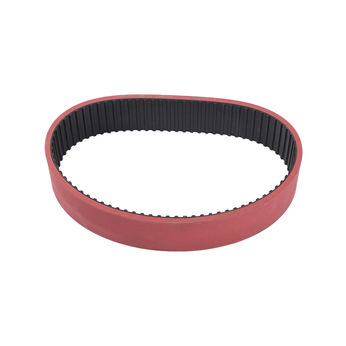 View More
Thickened timing belt
-
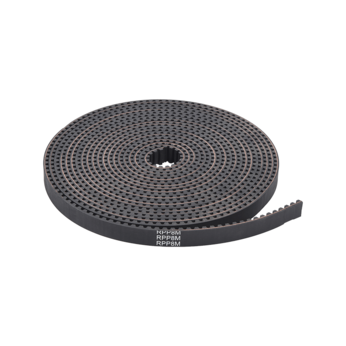 View More
Open Timing Belt
-
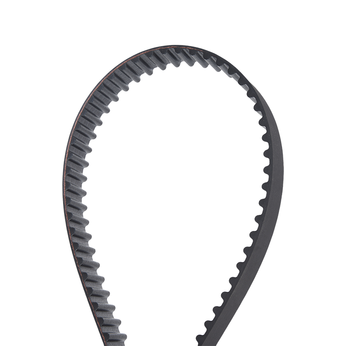 View More
Automotive V-belt
-
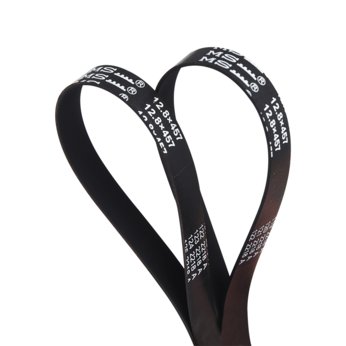 View More
Rubber Flat Belt
-
 View More
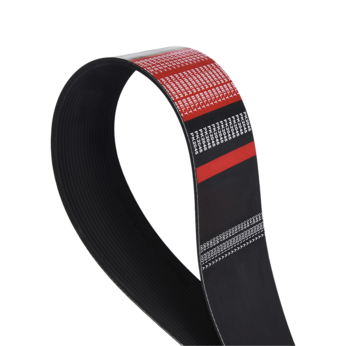
Ribbed Belt
-
 View More
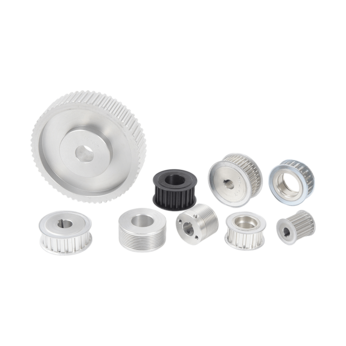
Synchronous Pulley
-
 View More
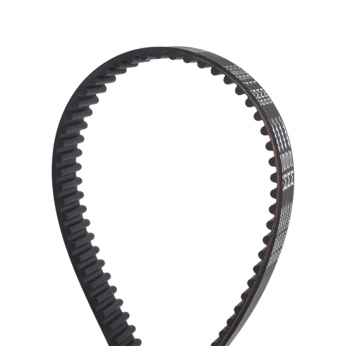
Arc tooth industrial rubber synchronous belt
-
View More
Automotive timing belt

Do you have a question? Feel free to contact!
 Tel: +86-0574-62498188 62497298
 Fax: +86-0574-62497297
 E-mail:
  Add: No. 65, Middle Jinniu Road, Moushan Town, Yuyao City, Zhejiang Province, China
Copyright © Ningbo GUL TZ Rubber Belt Co., Ltd. All rights reserved.

OEM Rubber Driving belts Manufacturers
