
 En
En  English
 简体中文
简体中文
Core Value Assessment: Why Focus on the Automotive timing belt
In modern automotive engineering, the Automotive timing belt is the core component that ensures mechanical synchronization within the engine. It is not merely a rubber loop but the critical link that maintains the precise timing between piston movement and valve opening.
Mechanical Synchronization and Power Output
The primary responsibility of the Automotive timing belt is to transmit rotational power from the crankshaft to the camshaft. This precise ratio is achieved through a toothed design, ensuring that valves open or close at the exact moment during the engine cycle for intake and exhaust.
Differences Between Interference and Non-Interference Engines
The most critical parameter in determining repair "value" depends on which design type your engine utilizes.
| Technical Parameter | Interference Engine | Non-Interference Engine |
| Structural Design | Valves enter the piston's path when fully open | Sufficient safety clearance remains between valves and pistons |
| Failure Consequence | Catastrophic: Pistons hit valves, causing metal breakage | Functional: Engine stalls, but internal parts usually remain intact |
| Repair Cost Ratio | Extremely High (usually involves head rebuild or engine replacement) | Lower (requires only belt replacement and re-timing) |
| Risk Level | High | Low |
Scientific Basis for Preventative Maintenance
Although the Automotive timing belt is constructed from high-strength synthetic rubber (such as Nitrile) and fiberglass reinforcement cords, it is subject to physical degradation from several factors:
- Thermal Cycling Stress: Constant high temperatures in the engine bay cause the rubber to vulcanize and become brittle.
- Tensile Fatigue: Prolonged tension causes internal fibers to break, even if the exterior appears smooth.
- Chemical Contamination: Slight leaks of engine oil or coolant can rapidly degrade the belt’s composite materials.
Cost Comparison: Repairing vs. Not Repairing
When evaluating the repair value of an Automotive timing belt, one must view it as "disaster prevention" rather than just an expense. Since most modern engines are of the interference design, a belt snap often marks the end of the engine's life.
Parameter Comparison: Preventative vs. Catastrophic Repair
The table below shows the cost differences between replacing the belt during a normal maintenance interval versus waiting for it to break:
| Evaluation Dimension | Preventative Automotive timing belt Replacement | Engine Overhaul/Replacement After Break |
| Basic Parts Cost | $100 - $350 (Includes belt, tensioner, water pump) | $2,000 - $4,500 (Includes head, valves, pistons) |
| Average Labor Fees | $300 - $800 (Approx. 3-6 hours) | $1,500 - $3,000 (Approx. 15-30 hours) |
| Estimated Total Cost | $400 - $1,200 | $3,500 - $8,000+ |
| Extra Hidden Costs | None | Towing fees, rental car, major vehicle depreciation |
| Success Rate | 100% (Restores factory sync) | 60% - 80% (Hidden mechanical damage may persist) |
Why is Labor the Primary Expense?
The parts for an Automotive timing belt are not inherently expensive; the high cost stems from the extremely complex disassembly process:
- Space Constraints: Most transverse engines require removing engine mounts, alternator belts, and A/C compressors just to gain access.
- High-Precision Timing: Technicians must ensure the crankshaft and camshaft marks align perfectly; even a 1-degree deviation can cause high fuel consumption or power loss.
- Bundle Repairs: Because the disassembly is extensive, technicians recommend replacing the water pump simultaneously. Replacing it later would require paying the same labor fee all over again.
Typical Repair Cost Reference by Vehicle Type
- Economy Cars (4-Cylinder): Relatively simple structure, costs usually range from $400 - $700.
- High-Performance/Luxury (V6 or V8): Tighter space and more components often drive costs to $800 - $1,500 or higher.
Three Key Dimensions to Determine if Repair is "Worth It"
Deciding whether to invest in an Automotive timing belt requires balancing the vehicle's economic life with its mechanical health. This is an asset management decision.
The Critical Threshold: Vehicle Value vs. Repair Cost
In automotive repair, the "50% Rule" is often applied. If a single repair exceeds 50% of the vehicle's current market value, caution is advised.
| Vehicle Value Range | Recommendation | Automotive timing belt Decision Logic |
| Under $2,000 | Consider Scrapping | Repair cost may equal car value, unless the car has specific utility. |
| $2,000 - $5,000 | Conditional Repair | If the engine and transmission are healthy, a new belt adds 3-5 years of life. |
| Over $5,000 | Must Repair | Compared to a new car loan, an $800 maintenance cost offers a high ROI. |
Efficiency Parameters of "Bundled Repairs"
The repair of an Automotive timing belt is rarely isolated. Handling related components at once significantly lowers the long-term unit cost of repair.
- Labor Overlap Efficiency:
- Separate Water Pump Labor: 100%
- Separate Timing Belt Labor: 100%
- Simultaneous Replacement: Total labor approx. 110% (only a small amount of extra time to swap the pump).
- Synchronous Replacement List:
- Tensioners/Idler Pulleys: Must be replaced. Failure leads to the new belt slipping.
- Water Pump: Strongly recommended. Pump bearing failure often accompanies belt wear.
- Camshaft Seals: Check for leaks. Oil leaks will corrode the new rubber.
Long-Term Ownership Calculation
If you plan to keep the vehicle for more than 24 months, replacing the Automotive timing belt is the most rational choice.
- Amortized Cost: At a $1,000 repair price, if it allows for 60,000 miles (approx. 5 years) of driving, the safety cost is only about $16.6 per month.
- Reliability Premium: Since belts often snap under high load or highway speeds, timely repair protects both your wallet and your driving safety.
FAQ
These professional answers are based on mechanical principles and repair practices regarding the Automotive timing belt.
Can I determine if a replacement is needed through visual inspection?
There is no 100% guarantee. While visible cracks, frayed edges, or oil stains are clear signs for replacement, structural failure of the Automotive timing belt often starts within the internal reinforcement layers.
- Parameter Comparison:
- Visually "Fine": Does not mean safe. Many belts look "good" hours before snapping.
- Mileage Parameter: Factory intervals are scientific limits based on fatigue testing and are more reliable than visual checks.
Why must the tensioner and water pump be replaced with the belt?
This is a matter of "system life" logic.
- Failure Chain Reaction: If a new Automotive timing belt is installed with an old tensioner, and that bearing seizes later, it will melt or snap the new belt instantly.
- Cost Comparison:
- Complete Kit: Pay labor once; system life is reset to 100%.
- Belt Only: If the water pump leaks later, you must pay 100% labor again to remove the belt.
How can I tell if the belt is potentially failing?
Before an Automotive timing belt snaps completely, the vehicle may exhibit subtle warnings:
| Symptom | Potential Cause | Severity |
| Ticking sound at idle | Loose belt or failing tensioner hitting the cover | Critical (Risk of tooth jump) |
| Engine Misfire | Belt stretch causing timing deviation | High (Power loss, high fuel use) |
| Oil leak from front cover | Camshaft seal failure soaking the belt in oil | Critical (Oil softens rubber rapidly) |
What is the difference between a Timing Belt and a Timing Chain?
If your car uses a chain, the maintenance logic is different:
- Automotive timing belt: Rubber, quiet operation, but has a fixed lifespan and must be replaced.
- Timing Chain: Metal, lubricated by engine oil, designed to last the life of the engine unless excessive noise occurs.
What is the risk probability of missing the replacement interval?
While there is no absolute percentage, industry statistics show that once you exceed the factory interval by 20%, the probability of sudden breakage rises exponentially. In extreme cold or heat, rubber aging accelerates, narrowing this window of safety.
Hot Products
-
 View More
-
 View More
V-belt For Industry
-
 View More
T Type Industry Rubber Synchronous Belt
-
 View More
Toothed wedge belt
-
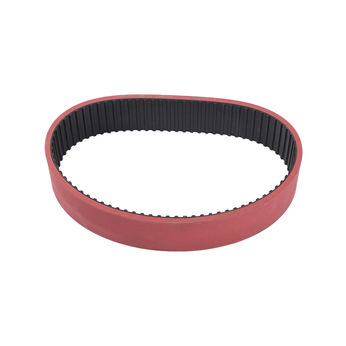 View More
Thickened timing belt
-
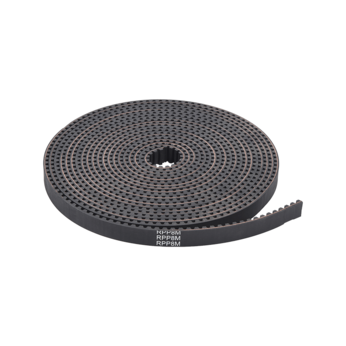 View More
Open Timing Belt
-
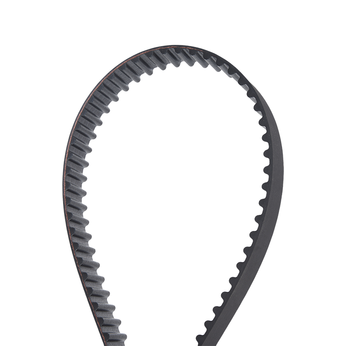 View More
Automotive V-belt
-
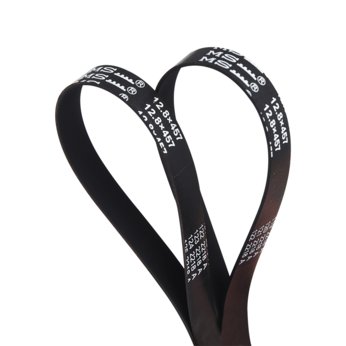 View More
Rubber Flat Belt
-
 View More
Ribbed Belt
-
 View More
Synchronous Pulley
-
 View More
Arc tooth industrial rubber synchronous belt
-
View More
Automotive timing belt

Do you have a question? Feel free to contact!
 Tel: +86-0574-62498188 62497298
 Fax: +86-0574-62497297
 E-mail:
  Add: No. 65, Middle Jinniu Road, Moushan Town, Yuyao City, Zhejiang Province, China
Copyright © Ningbo GUL TZ Rubber Belt Co., Ltd. All rights reserved.

OEM Rubber Driving belts Manufacturers
