
 En
En  English
 简体中文
简体中文
Compared to standard trapezoidal tooth synchronous belts, what are the advantages and limitations of arc-tooth synchronous belts
Timing belts are critical components in modern industrial transmission systems, playing a vital role in precision machinery, automation equipment, and high-load applications. With advancements in industrial technology, arc tooth timing belts have gained attention for their unique tooth profile, offering significant advantages in performance and service life. This article provides a professional analysis of the differences, advantages, and limitations of arc tooth timing belts compared to standard trapezoidal timing belts, helping businesses make informed selection decisions.
Tooth Profile Structure
The standard trapezoidal timing belt features straight, trapezoidal teeth with fixed root and top angles, relying primarily on point contact between the teeth and pulleys. Arc tooth timing belts, in contrast, have curved teeth that gradually transition from root to tip, forming a continuous meshing surface. This curved tooth design increases contact area, reduces localized stress, and improves load distribution.
Arc tooth profiles also optimize the engagement angle, ensuring smooth contact throughout the meshing cycle. Standard trapezoidal belts may experience impact and vibration at high speeds, especially under heavy loads, leading to accelerated wear at tooth roots and tips.
Load Capacity and Service Life
The surface contact characteristic of arc tooth timing belts significantly enhances load capacity. Under the same width and pitch conditions, arc tooth belts can transmit higher torque and reduce stress concentration, extending the overall service life of the transmission system. Standard trapezoidal belts are more prone to tooth wear and fatigue under high-load, high-speed conditions, requiring frequent inspection and replacement.
The smooth engagement of arc tooth belts also reduces impact and noise, making them suitable for precision transmission applications. Over long-term operation, tension loss in arc tooth belts has minimal effect on transmission accuracy, whereas trapezoidal belts can slip under insufficient tension, affecting synchronization.
Transmission Accuracy and Stability
Arc tooth timing belts achieve continuous surface contact during meshing, enabling smoother power transmission and minimal transmission error. In high-speed or multi-axis synchronous applications, arc tooth belts maintain higher precision and operational stability. Standard trapezoidal belts, relying on point contact, may generate vibration at high speeds, leading to cumulative transmission errors that impact the performance of precision machinery.
Smooth engagement also reduces mechanical shocks, lowering wear on bearings and pulleys and improving overall system reliability. Standard trapezoidal belts under continuous heavy load are more likely to experience tooth jumping or tooth breakage, requiring frequent maintenance.
Application Range and Limitations
Arc tooth timing belts are ideal for high-load, high-speed, and high-precision applications, including industrial automation, robotics, printing machines, and packaging equipment. Their surface-contact tooth design increases load capacity while minimizing noise and vibration, meeting strict precision and stability requirements.
Standard trapezoidal belts are cost-effective and suitable for general machinery and light-load equipment. Their manufacturing process is mature, and spare parts are widely available, but performance is limited under high-speed, high-load, or precision-critical conditions.
Arc tooth belts require higher design and manufacturing standards, including precise materials, tooth geometry, and pulley matching. Improper use or inadequate maintenance may lead to incomplete engagement or premature wear. Standard trapezoidal belts are less demanding in these areas but naturally have performance limitations.
Hot Products
-
 View More
-
 View More
V-belt For Industry
-
 View More
T Type Industry Rubber Synchronous Belt
-
 View More
Toothed wedge belt
-
 View More
Thickened timing belt
-
 View More
Open Timing Belt
-
 View More
Automotive V-belt
-
 View More
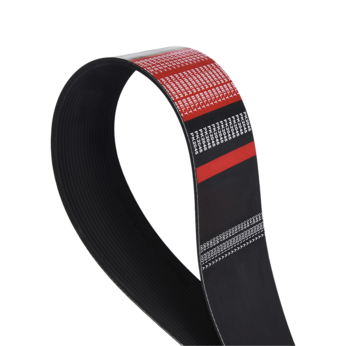
Rubber Flat Belt
-
 View More
Ribbed Belt
-
 View More
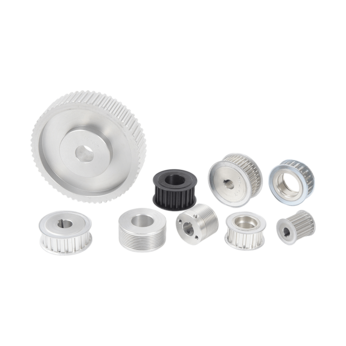
Synchronous Pulley
-
 View More
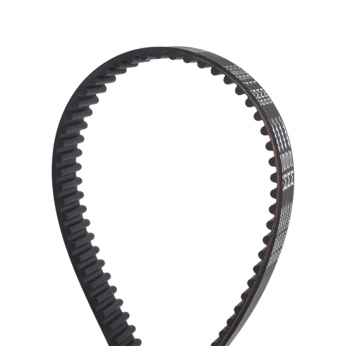
Arc tooth industrial rubber synchronous belt
-
View More
Automotive timing belt

Do you have a question? Feel free to contact!
 Tel: +86-0574-62498188 62497298
 Fax: +86-0574-62497297
 E-mail:
  Add: No. 65, Middle Jinniu Road, Moushan Town, Yuyao City, Zhejiang Province, China
Copyright © Ningbo GUL TZ Rubber Belt Co., Ltd. All rights reserved.

OEM Rubber Driving belts Manufacturers
