
 En
En  English
 简体中文
简体中文
Why Are Raw-Edge V Belts Replacing Traditional Wrapped Belts in Modern Machinery
The Anatomy of Power Transmission: Understanding V-Belt Design
The evolution of power transmission is essentially the history of industrial efficiency. From early leather flat belts to today's high-tech elastomer materials, the V-belt has consistently occupied the core position of mechanical power delivery. Its fundamental principle lies in the Wedge Effect, where the belt is compressed into the pulley groove to generate lateral pressure, creating friction far exceeding that of flat belts.
However, as modern machinery moves toward miniaturization, high speeds, and higher efficiency, traditional wrapped structures have revealed limitations. This has led to the widespread adoption of Raw-Edge V Belts. The design philosophy of Raw-Edge V Belts is one of subtraction—removing the external fabric wrapping to allow the internal rubber to contact the pulley groove directly, achieving tighter grip and superior heat dissipation.
V-Belt Basic Components
Regardless of the type, the core typically consists of four parts:
- Top Rubber: Protects the tensile layer.
- Tensile Cords: Usually polyester or aramid fibers, which bear the main pulling force.
- Compression Rubber: Provides support and withstands compressive stress.
- Cover/Sidewalls: Determines whether it is a wrapped belt or Raw-Edge V Belts.
Wrapped V-Belts: The Traditional Workhorse
The wrapped V-belt, also known as the envelope-style belt, is the most classic industrial power transmission belt. Its entire surface is enclosed by one or more layers of rubber-impregnated fabric (usually cotton or synthetic fiber).
Structural Characteristics and Performance
The fabric layer of the wrapped belt serves to protect the internal components from environmental factors. Because the fabric provides a degree of natural lubrication, it allows for controlled slippage within the pulley grooves during heavy-start applications.
- Abrasion Resistance: The external fabric layer is highly durable and suitable for operation in dusty or harsh environments.
- Clutching Properties: Due to the allowable slight slippage, these belts are often used in equipment requiring frequent starts or those subjected to high shock loads.
- Heat Accumulation: A disadvantage is that the fabric layer acts as an insulator, making it difficult for internal heat to dissipate during high-load operations.
Raw-Edge V Belts: The High-Efficiency Contender
Raw-Edge V Belts are manufactured without an outer fabric wrap on the sidewalls. Instead, the internal rubber compound is exposed through a cutting process. To offset potential flexibility issues caused by this rigid structure, most Raw-Edge V Belts feature molded notches or cogs on the bottom, leading them to be commonly referred to as cogged raw-edge belts.
Core Advantage Analysis
- Superior Grip: The sidewalls of Raw-Edge V Belts directly expose the rubber compound, resulting in a friction coefficient significantly higher than that of fabric surfaces. This means at the same tension, the slip rate is far lower than that of wrapped belts.
- Exceptional Flexibility: Without the constraint of an outer fabric layer, combined with the cogged design, Raw-Edge V Belts can wrap around pulleys with much smaller diameters.
- Heat Dissipation: With no fabric barrier on the sides, heat can dissipate directly through the sidewalls into the air, greatly extending the service life of the rubber.
Key Performance Differences: A Comparative Analysis
To provide a clear view of the performance gaps between Raw-Edge V Belts and wrapped belts, we compare several key technical indicators.
Parameter Comparison Table
| Performance Metric | Wrapped V-Belts | Raw-Edge V Belts | Notes |
| Friction Coefficient | Approx. 0.3 - 0.4 | Approx. 0.5 - 0.8 | Raw-Edge V Belts have stronger grip |
| Transmission Efficiency | 90% - 94% | 95% - 98% | Raw-edge belts offer significant energy savings |
| Min. Pulley Diameter | Large (Limited by fabric) | Very Small (Supported by cogs) | Suitable for compact designs |
| Max. Linear Speed | Approx. 30 m/s | Approx. 40-50 m/s | Better for high-speed applications |
| Operating Temp Range | -30 C to +70 C | -40 C to +110 C | Better heat dissipation and higher limits |
| Noise Levels | Quiet start, noisy at speed | Stable at high speeds | Reduced squeal from slipping |
| Environment Resistance | Excellent (Full protection) | Moderate (Sidewalls exposed) | Wrapped is better for extreme dirt |
Differences in Power Transmission Capacity
At the same belt width, Raw-Edge V Belts can typically carry a rated power 20% to 30% higher than wrapped belts. This is because the rubber compound of Raw-Edge V Belts wedges more tightly into the pulley groove, resulting in minimal energy loss.
Geometric and Dimensional Nuances
When selecting Raw-Edge V Belts, attention must be paid to the geometry and its fit with the pulley.
- Profile Matching: Common classical models (such as A, B, C) usually correspond to raw-edge versions designated as AX, BX, and CX. The X denotes the cogged raw-edge structure.
- Bending Stress: Bending stress is proportional to belt thickness and inversely proportional to pulley diameter. Because the cogged design of Raw-Edge V Belts effectively reduces the actual bending thickness, the bending stress is significantly lowered. This allows for a much longer fatigue life under cyclic bending.
Durability and Life Cycle Costs
When evaluating Raw-Edge V Belts versus wrapped belts, the initial purchase price is often just the tip of the iceberg. The industrial sector focuses more on Total Cost of Ownership (TCO), which includes energy consumption, maintenance labor, and downtime losses.
Wear Mechanism Comparison
- Wrapped V-Belts: Failure usually begins with the fraying or cracking of the external fabric layer. Once the fabric is compromised, the internal tensile cords are directly exposed to the friction of the pulley groove, leading to rapid failure.
- Raw-Edge V Belts: Since there is no fabric wrap, wear occurs directly on the sidewall rubber. High-quality Raw-Edge V Belts use premium synthetic rubbers (like EPDM), which wear very evenly. The primary failure mode is fatigue cracking at the root of the cogs, but this typically occurs only at the very end of the service life.
Economic Parameter Comparison
| Cost/Life Dimension | Wrapped V-Belts | Raw-Edge V Belts |
| Initial Price | Lower (1.0x) | Higher (Approx. 1.2x - 1.5x) |
| Energy Loss Rate | Higher (Internal friction/slip) | Very Low (High flexibility) |
| Retensioning Frequency | Frequent (High initial stretch) | Low (High material stability) |
| Average Service Life | Baseline Life | Often 50% - 100% longer |
| Downtime Cost | Higher (Frequent replacement) | Lower (Longer cycles) |
Energy Saving Example
For a 45kW industrial fan running 8,000 hours per year, upgrading from wrapped belts to Raw-Edge V Belts with a 3% efficiency gain results in approximately 10,800 kWh saved annually. Based on average industrial electricity rates, the premium cost of Raw-Edge V Belts is usually recovered via energy savings within 6 months.
Environmental Factors and Selection Criteria
Different working environments place harsh demands on belt structures. Raw-Edge V Belts are designed using material science to solve many extreme environmental challenges.
Temperature Tolerance
Wrapped belts dissipate internal heat slowly due to their multi-layer composite structure. In high ambient temperatures, the internal rubber can suffer from over-vulcanization and become brittle. Raw-Edge V Belts (especially those with cogs) increase the surface area, acting like heat sinks.
| Temperature Metrics | Wrapped V-Belts | Raw-Edge V Belts (EPDM) |
| Standard Upper Limit | +70 C | +110 C |
| Short-term Peak | +90 C | +130 C |
| Low Temp Brittleness | -30 C | -40 C to -50 C |
Chemical and Oil Resistance
- Wrapped Belts: The fabric layer can block some dust, but in oily environments, the fabric can act as a wick, drawing oil into the belt interior and causing delamination.
- Raw-Edge V Belts: The sidewalls are exposed. While Chloroprene versions offer good oil resistance, EPDM versions are slightly weaker against oil but offer extreme resistance to ozone and UV aging.
Industry-Specific Use Cases
Automotive Systems
In modern engine bays where space is restricted and heat is intense, Raw-Edge V Belts are the primary choice. Their flexibility allows the belt to operate at high speeds over complex angles and tiny alternator pulleys while maintaining quiet performance.
HVAC Systems
For large commercial air handling units, the high efficiency of Raw-Edge V Belts translates to lower operating costs. Additionally, raw-edge belts operate with lower vibration frequencies, reducing mechanical noise transmission through ductwork.
Mining and Crushing Equipment
In environments with extreme shock loads and heavy dust, wrapped belts are sometimes preferred because the fabric layer protects the core from abrasive wear. However, for higher torque output in crushers, high-strength Raw-Edge V Belts reinforced with Aramid cords provide superior power delivery.
Installation and Tensioning Best Practices
Even the highest quality Raw-Edge V Belts will underperform if not installed correctly.
- Alignment: Raw-Edge V Belts are very sensitive to pulley misalignment. Misalignment causes uneven sidewall wear or even cog stripping. It is recommended to keep the offset angle within 0.5 degrees.
- Tension Control: Because of their high grip, Raw-Edge V Belts do not require as much initial tension as wrapped belts, but tension must be measured precisely using a sonic tension meter or a pressure gauge.
- No Prying: Using a pry bar to force Raw-Edge V Belts into the groove can damage the internal tensile cords, which is the leading cause of sudden belt breakage after only a few hours of operation.
FAQ: Common Questions About V-Belt Selection
- Q: Why do Raw-Edge V Belts usually have cogs (notches)?
A: The cogs are not for meshing like a timing belt; they are designed to increase longitudinal flexibility. This allows Raw-Edge V Belts to wrap around small diameter pulleys without losing lateral rigidity and helps reduce heat buildup. - Q: Can I mix wrapped belts and Raw-Edge V Belts on the same drive?
A: Absolutely not. In multi-belt drives, never mix types. Because Raw-Edge V Belts have different friction coefficients and elastic moduli, the load will tilt heavily toward the raw-edge belts, causing them to burn out rapidly due to overload. - Q: How can I tell them apart visually?
A: Look at the sides. A wrapped belt is entirely covered in fabric with a textured look. A Raw-Edge V Belts shows a smooth rubber texture or visible cut marks on the sides, usually with a notched (cogged) profile on the bottom. - Q: How do Raw-Edge V Belts perform in dusty environments?
A: In very fine abrasive dust, the lack of a fabric cover may allow dust to act as a grinding agent against the rubber. However, in most standard industrial settings, the hardness of modern synthetic rubber is sufficient to resist ordinary dust erosion.
Hot Products
-
 View More
-
 View More
V-belt For Industry
-
 View More
T Type Industry Rubber Synchronous Belt
-
 View More
Toothed wedge belt
-
 View More
Thickened timing belt
-
 View More
Open Timing Belt
-
 View More
Automotive V-belt
-
 View More
Rubber Flat Belt
-
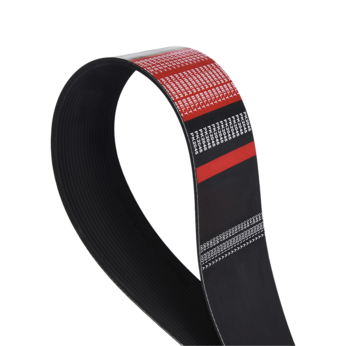 View More
Ribbed Belt
-
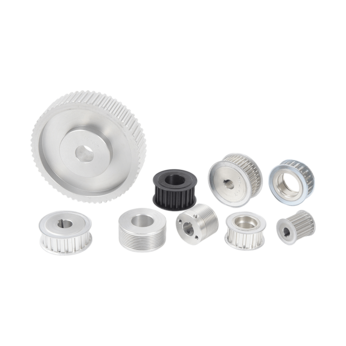 View More
Synchronous Pulley
-
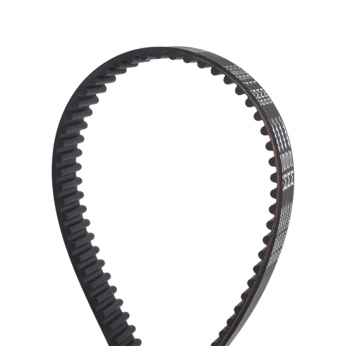 View More
Arc tooth industrial rubber synchronous belt
-
View More
Automotive timing belt

Do you have a question? Feel free to contact!
 Tel: +86-0574-62498188 62497298
 Fax: +86-0574-62497297
 E-mail:
  Add: No. 65, Middle Jinniu Road, Moushan Town, Yuyao City, Zhejiang Province, China
Copyright © Ningbo GUL TZ Rubber Belt Co., Ltd. All rights reserved.

OEM Rubber Driving belts Manufacturers
