
 En
 English
 简体中文

Timing Chain vs Timing Belt: Which Is Really Better for Modern Car Engines?
Is a Timing Chain Better Than a Belt?
No single answer covers every engine. A timing chain is the stronger mechanical part in terms of raw material fatigue, which is why many carmakers still fit chains in high-torque diesel engines and longitudinal powertrain layouts. A timing belt, however, is the better engineering solution for quietness, weight, precision at high speed, and predictable service cost. In short: the chain is better at surviving neglect; the belt is better at doing the timing job efficiently over the life of the vehicle.
This guide compares both drive systems from the perspective of a belt factory that designs rubber synchronous belts for automotive and industrial applications every day. You will find construction details, a direct comparison table, realistic lifespan and cost data, failure warning information, and a practical decision sequence that works for mechanics, repair-shop buyers, and machinery designers.
Noise
A rubber belt dampens tooth impact far better than a steel chain. Measured drive noise is typically 3–8 dB lower across the operating range.
Weight
A belt and its sprockets generally weigh 40–60 percent less than a chain set, lowering rotating inertia and reducing parasitic losses.
Service Cost
Scheduled belt replacement is far cheaper than a chain repair. Chain replacement involves an engine-level labor task that parts alone cannot offset.
Failure Warning
Belts give gradual visible signs such as cracking and worn fabric. Chains often stretch or wear guides without visible warning until rattling begins.
Why Engine Timing Needs a Positive Drive
In a four-stroke engine, the camshaft must rotate at exactly half the crankshaft speed. Valves have to open and close at a fixed angular position relative to the piston, and any slip destroys that relationship. Friction-based components such as a V-ribbed belt or a flat belt cannot guarantee this; only a positive drive with teeth engaging mating grooves can. Timing chains and timing belts are both positive drives, but they achieve positive engagement in completely different ways.
The second reason the choice is critical is the interference engine design. In most modern engines, the piston crown can physically touch an open valve if the valve timing shifts even a few degrees. A timing-belt failure or a chain jump at high speed usually bends valves and damages pistons. This is why the quality of the belt, the chain guides, and the tensioner is not a trivial detail — it is the difference between a scheduled service and a full cylinder-head rebuild.
Both systems therefore have the same core job: keep the crankshaft and camshaft locked together. The comparison below is about how they perform that job under real operating conditions.
Timing Belt Construction: What Actually Determines Service Life
A modern timing belt is a composite product. Three functional layers decide its life: the rubber compound body, typically HNBR or high-grade neoprene; the glass-fiber tensile cord embedded along the pitch line; and the tooth-facing fabric that protects the tooth root from fatigue and wear. The rubber compound carries compressive stress and must tolerate heat and oil. The tensile cord carries the full pulling load and must resist fatigue through millions of bending cycles. The fabric protects the most stressed point of each tooth.
Tooth profile is the second factor. Trapezoidal T-type teeth are simple and economical, and remain common in many industrial drives. Curvilinear arc-tooth profiles spread the load over a larger tooth flank, which raises torque capacity and smoothes engagement. Double-sided belts carry teeth on both faces for reverse drives. Each profile has a specific pulley geometry, so mixing standards is never safe.
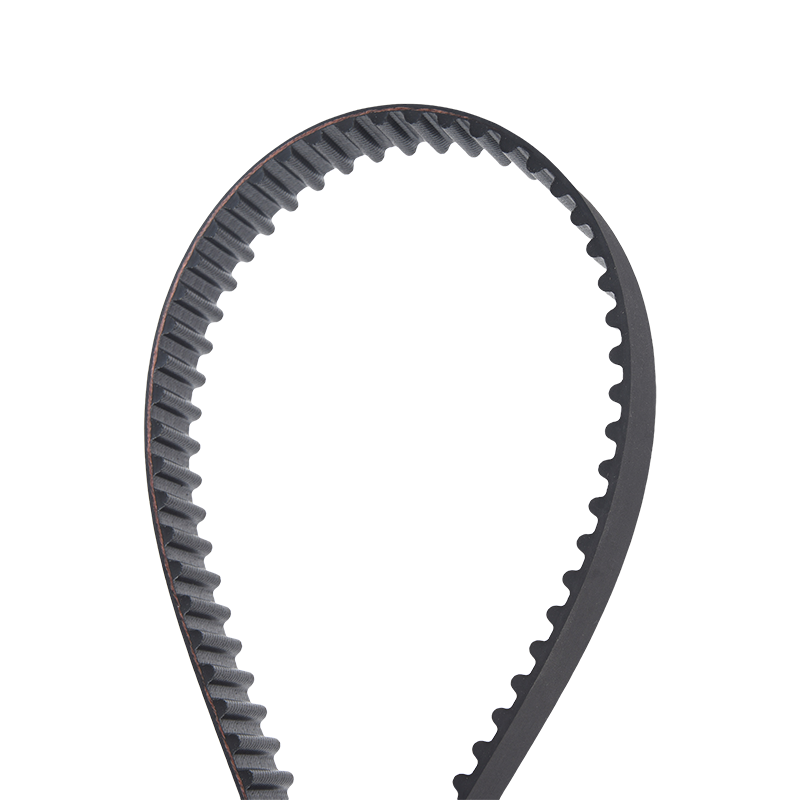 Automotive Timing Belts for High-Temperature Engine EnvironmentsThis belt line offers curvilinear and trapezoidal profiles engineered for under-bonnet conditions, with oil resistance and durability essential for cam drives.View Product →
For automotive engines, the belt must also survive the under-bonnet environment: temperatures above 120 °C near the exhaust side, occasional oil splashes, and cold-start shock. Automotive timing belt production therefore uses tighter cord tension control and a higher-grade rubber compound than generic industrial belts. A belt that fails from heat or oil attack is usually a belt that was specified or manufactured incorrectly, not a fundamental weakness of belts as a drive concept.
Timing Chain Construction: Durable, but Not Maintenance-Free
A timing chain is built from stamped steel link plates, hardened pins, and rollers running on steel sprockets. Rail guides keep the chain path stable, and a hydraulic tensioner adjusts slack. Steel gives the chain high fatigue strength and resistance to heat and oil attack, which is why heavy-duty and low-speed applications have used chains for decades.
The chain's main vulnerability is not the metal itself but the system around it: hydraulic tensioners losing oil pressure, plastic or steel guide rails wearing, and chain stretch over time. Modern variable-valve-timing systems measure the phase difference between crankshaft and camshaft, and a stretched chain can trigger phase error codes and rattle long before it breaks.
A chain also requires pressurized engine oil for lubrication. Irregular oil changes, soot in diesel oil, or low oil pressure accelerate pin and guide wear faster than most maintenance schedules predict. That is why the common phrase "chains are maintenance-free" is misleading: the chain has no service interval only when the engine oil is changed on time and the tensioner is healthy.
Belt vs Chain: Side-by-Side Comparison
The table below summarizes the differences for a typical passenger-car installation. Industrial drives follow the same logic, with load and speed shifting the balance.
| Attribute | Timing Belt | Timing Chain |
|---|---|---|
| Operating noise | 3–8 dB quieter, rubber dampens tooth impact | Audible metallic clatter, especially on cold start |
| Typical design life | 60,000–100,000 miles, depends on rubber grade | 150,000–200,000 miles if oil service is excellent |
| Replacement recommendation | Scheduled, per OEM interval in miles and years | Inspect and diagnose; no universal interval |
| Replacement cost, parts and labor | Usually $300–$700 | Usually $1,200–$2,800 |
| Weight of installed system | Lighter by roughly 40–60 percent | Heavier sprockets, guides, tensioner housing |
| Engine oil required | No, dry-running system | Yes, oil condition directly affects life |
| Efficiency | Lower bending resistance and lower inertia | Higher friction and higher rotating inertia |
| Failure warning | Visible cracking, fabric wear, ticking | Rattle, phase error codes, guide wear debris |
| High-speed behavior | Better; stable above 3,000 rpm | Noisier; more inertia at high rpm |
| High-torque robustness | Good with arc-tooth profile | Excellent at low speed |
| Temperature sensitivity | Compound dependent; HNBR resists about 140 °C | Safe within normal oil temperature range |
The ranges in the table make one point: belt and chain overlap in lifespan when the belt is produced to an automotive specification and the chain receives perfect lubrication. The deciding factors are cost predictability and the type of load the drive has to carry.
Service Life and Real Cost per 100,000 Miles
Manufacturer claims and internet debates usually focus on one number: mileage. A quality HNBR and glass-fiber belt in a reasonably cool, clean engine can physically survive well over 100,000 miles. The published interval is deliberately conservative because age hardens rubber even when the car sits parked. This is why the recommendation is usually based on both miles and years. For actual distance recommendations across popular engines and the logic behind them, see our detailed article on how long timing belts last.
The chain's lifetime claim has a catch. Some chains genuinely reach 250,000 miles; others stretch or strip guides below 100,000 miles when the engine runs long intervals on poor oil. The repair, when it appears, is an order of magnitude more expensive because the timing cover, crankshaft hub, and often the oil pan must come off.
Average timing-component ownership cost over 150,000 miles, parts and labor in USD
Estimates based on typical workshop rates for a compact passenger car; large engines and luxury platforms cost more.
The bottom line is not that belts never fail. It is that a belt failure is a scheduled, visible event, while a chain failure is often silent until the engine tells you in an expensive way.
Noise, Smoothness, and Efficiency: Where Belts Pull Ahead
Rubber is a natural vibration damper. Each belt tooth enters and exits the pulley with elastic deformation that absorbs impact energy. A steel chain links together rigid elements and transfers impact energy as noise, which is why chain-driven engines are audibly harsher at idle and at high rpm.
Typical timing-drive noise level by engine speed
Curve shape is illustrative; absolute level depends on engine layout, cover design, and component wear.
Efficiency comparison follows the same pattern. A chain set has more parts in relative motion and higher rotating inertia. A timing belt drive typically consumes less power per revolution, a difference small enough that most official figures do not list it separately, but measurable on a dynamometer — usually 1–2 percent at mid speeds and more at high rpm. In small-displacement engines tuned for fuel economy, this is one reason lightweight belt-driven designs remain common in the compact car segment.
Failure Modes: Warning Signs, Risks, and Interference Engines
A timing belt rarely snaps without evidence. Common failure patterns are tooth-root cracking caused by fatigue, fabric wear at the root that advances to cord breakage, rubber hardening from heat or oil exposure, and tooth shearing caused by a sudden camshaft stop. Most of these can be found by removing the plastic inspection cover and bending the belt inside a tight radius.
Worn timing chains show up differently: a rattle at cold start from slack, metallic ticking, and diagnostic codes such as cam-crank correlation errors. Guides wear into the chain or the chain wears into the engine cover. In many cases there is no visible check without removing the timing cover, and by then the repair is usually large.
Belt warning signs
- Cracks on the rubber backing between teeth
- Glazed tooth surfaces or melted fabric
- Missing or chipped teeth at the root
- A frayed backing crown visible near pulleys
- Oily contamination and swelled rubber edge
Chain warning signs
- Three to five seconds of rattle on cold start
- Persistent metallic clatter at idle
- Cam-crank phase correlation error codes
- Metal debris in engine oil
- Rough idle combined with timing noise
In an interference engine, whichever component fails first — belt or chain — the result can bend valves, damage pistons, and score cylinder bores. The belt's advantage is that its wear is inspectable at regular service intervals; the chain's advantage is that a well-lubricated system rarely fails at all.
High-Torque Industrial Drives: When a Chain Is Still the Default
In industrial machinery, the question often appears as chain versus synchronous belt rather than in an automotive context. For extremely low speed, very high torque, and contaminated environments — large conveyor drive indices, cement equipment, heavy indexing tables — the chain remains a robust reference because its metal-to-metal contact tolerates shock loads that would damage rubber.
Yet modern arc-tooth timing belts have rewritten that rule for a large share of industrial applications. A curvilinear-profile belt with glass-fiber tensile cords can transmit high torque with no lubrication, no metal debris, and constant pitch. It is also quieter, faster, and lighter, and it does not require the oil-tight housing that a chain does.
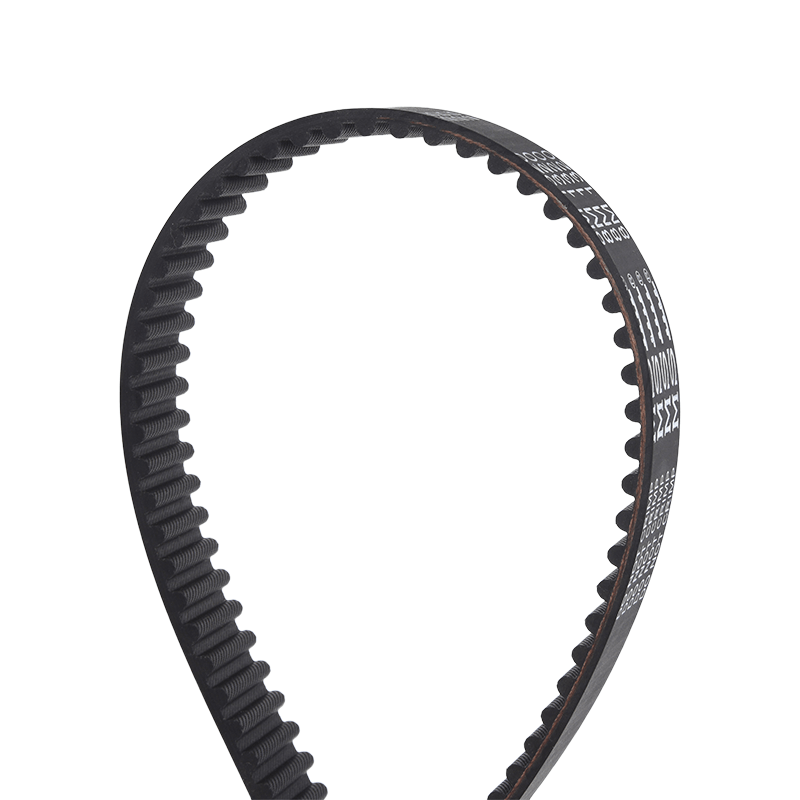 Arc-Tooth Industrial Synchronous Belts for High-Torque ApplicationsThese arc-tooth belts transmit high torque quietly and without lubrication, making them a modern alternative to chains across numerous industrial sectors.View Product →
For engineering data on choosing a belt in the high-torque class, our guide on high-torque industrial timing belts covers selection criteria and installation limits.
The practical boundary is speed and torque density. Under roughly 300 rpm with high dynamic peaks, a chain is still hard to beat; above 1,000 rpm the belt usually wins on noise, efficiency, and cost per unit of transmitted power. Between those values, the tooth profile and belt width determine the outcome.
What Separates a 100,000-Mile Belt from a Premature Failure
As a timing belt manufacturer, we see failures that are almost never caused by the belt concept itself. They come from material shortcuts, inaccurate tooth grinding, unstable cord tension during processing, and poor curing control. Two belts with the same printed part number and the same dimensions can differ enormously in life when one is made from a validated virgin compound and the other from cheap reprocessed rubber.
- Rubber compound: HNBR or neoprene base mixed to validated formulas; heat and oil resistance is the first line of defense.
- Tensile cord: continuous glass-fiber cords with consistent tension; cord drift inside the pitch line causes early elongation.
- Tooth profile accuracy: gauged with an optical profiler; an oversized or undersized tooth changes mesh noise and stress.
- Vulcanization control: time-temperature-pressure control determines whether the compound reaches full mechanical strength.
- Batch traceability: test results per batch allow verification; a manufacturer without traceability cannot prove quality.
- Storage discipline: belts are sensitive to ozone, UV, and high temperature; stock rotation matters.
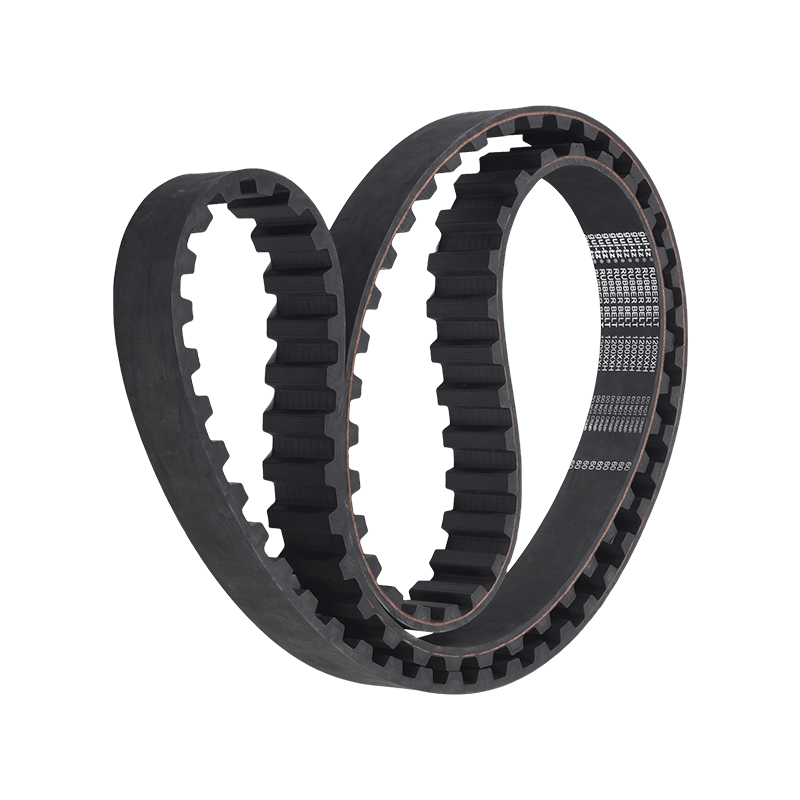 T-Type Industrial Rubber Timing Belts with Versatile SpecsAvailable in MXL, XL, L, H, and AT series, these chloroprene-rubber belts suit diverse power transmission needs, but quality control defines their lifespan.View Product →
This is why buying on price alone is a false economy. A high-quality T-type or arc-tooth industrial belt from a factory with standards participation and ISO-certified process control delivers a predictable replacement interval; an off-spec belt can cost more in machine downtime than the complete drive saved.
Choosing the Right Drive: A Practical Decision Sequence
- Identify the original specification. In a car, the engine is designed for either belt or chain; conversion is impractical because sprocket geometry, tensioner mounts, and covers differ.
- Define load and speed for an industrial drive. Calculate peak torque at the driven pulley, rpm range, and shock factor before selecting a profile.
- Evaluate the environment. Oil mist, dust, and ambient temperature above 90 °C should push the analysis toward the appropriate belt compound or a sealed chain.
- Compare total life-cycle cost. Add belt replacement intervals to the purchase price; add possible chain failure risk to the chain price.
- Check what you can inspect. If the drive is hidden inside a housing, chain guides that cannot be inspected become an argument for a belt with a maintenance window.
- Work with a manufacturer that shares test data. Cord tension certificates, compound data sheets, and tooth profile inspection reports save design iterations.
For repair shops, the practical rule is: replace a belt engine with the highest-grade belt on the market, replace a chain engine with an equivalent-quality chain kit, and never cross-mix tooth profiles between different standards.
A Note on Sourcing Timing Belts and Sprockets Directly
Buying from a factory that also produces the mating pulleys reduces matching errors. When belt and synchronous pulley come from the same design baseline, the pitch line, tooth clearance, and flange dimensions are already validated together. This is why belt-and-pulley sets from one production line are considerably safer than mixing suppliers.
A factory with rubber mixing, cord treating, belt molding, and pulley machining under one roof can also hold tolerances across the whole transmission package. That is the practical difference when the drive must run quietly at 6,000 rpm or handle a synchronized axis for years in production machinery.
Timing Belt vs Chain FAQs
Do timing belts need oil, and does oil damage them?
Timing belts are dry-running components. Engine oil attacking the rubber is one of the main causes of cracking, so a leaking cam seal or crank seal must be repaired together with the belt. The belt itself should never be oiled.
Will a timing chain really last the life of the engine?
Many chains do, when the engine receives short, clean oil changes and moderate duty. But stretch and guide wear are common on modern engines with extended oil intervals, and a stretched chain can trigger VVT codes and eventually skip teeth. Lifetime is an engineering average, not a guarantee.
Which is cheaper over 150,000 miles: a belt or a chain?
On average the belt is cheaper. Scheduled belt replacement twice in 150,000 miles costs much less than one chain replacement; a chain that fails early can cost more than both belt services combined. The chain's financial advantage appears only in engines that truly reach high mileage with no repair.
Can I convert my chain-driven engine to a timing belt?
In practice, no. The crankshaft and camshaft sprockets, tensioner mount, engine front cover, and often the oil pump drive are designed for a specific chain width and pitch. Conversion requires custom parts, machine work, and real validation risk; it is not economical.
What is the average lifespan of a good aftermarket timing belt?
A properly installed, correctly tensioned belt made of HNBR compound and glass-fiber cord typically achieves the OEM-recommended interval of 60,000–100,000 miles, and many survive beyond 120,000 miles in clean engines. Heat, oil, misalignment, and incorrect tension reduce that figure sharply.
Which is better for high-speed, high-precision applications?
A timing belt. The flexible belt absorbs tooth-entry impacts, keeps a constant pitch, and produces no metal-to-metal backlash. Precision indexing, servo axes, and high-rpm cam drives in machinery are almost always belt-based for this reason.
Hot Products
-
 View More
-
 View More
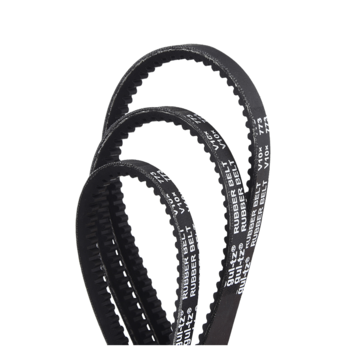
V-belt For Industry
-
 View More
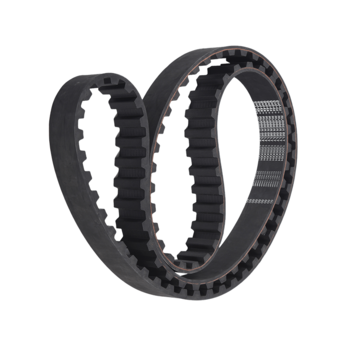
T Type Industry Rubber Synchronous Belt
-
 View More
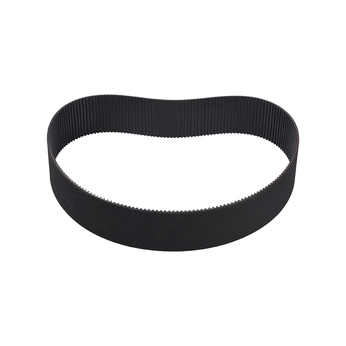
Toothed wedge belt
-
 View More
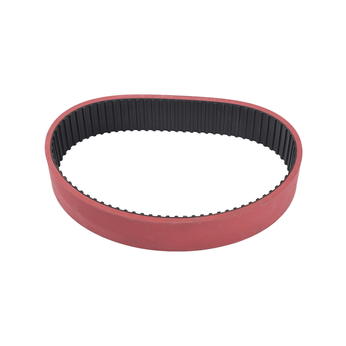
Thickened timing belt
-
 View More
Open Timing Belt
-
 View More
Automotive V-belt
-
 View More
Rubber Flat Belt
-
 View More
Ribbed Belt
-
 View More
Synchronous Pulley
-
 View More
Arc tooth industrial rubber synchronous belt
-
View More
Automotive timing belt

Do you have a question? Feel free to contact!
 Tel: +86-0574-62498188 62497298
 Fax: +86-0574-62497297
 E-mail:
 Add: No. 65, Middle Jinniu Road, Moushan Town, Yuyao City, Zhejiang Province, China
Copyright © Ningbo GUL TZ Rubber Belt Co., Ltd. All rights reserved.

OEM Rubber Driving belts Manufacturers
